Driving License Online Guide—How to Add Category and Renew License in Nepal
November 10, 2025
Driving License Online Guide—How to Add Category and Renew License in Nepal
November 10, 2025
The Department of Transport Management (DoTM), Nepal, has digitized most of its services. This allows license holders to conveniently manage their driving license-related tasks online.
Whether you want to add a new vehicle category, renew your license, or request Smart Card fast printing, the process can be completed through the official DoTM online system.
Here in this blog you can get proper information and navigation on license application and add category.
You must first log in before you can add a new category (like motorcycle, car, or heavy vehicle) to your current driver's license. And later submit a new application through the DoTM online system.
If any details are incorrect, visit the nearest Transport Management Office (TMO) to correct them before applying.
Once verified, your dashboard will display a summary of your license details along with all available online services.
You will require a license before adding a category. So, visit this link to know about how to apply for a new driving license in Nepal, and get your license prepared.
License renewal is now easier than ever. The DoTM online system allows you to renew your expired or expiring driving license without standing in long queues.
If any information is incorrect, visit the respective TMO before proceeding.
Once verified, your dashboard will show a summary of your license and available services.
The updated policy has increased the validity of new and renewed driver's licenses for those under 60 from five to ten years. So get your license ready and apply early.
The Smart Card Fast Printing service allows license holders to receive their smart driving license card faster after approval.
If any details are incorrect, you must correct them at the respective office before continuing.
After successful verification, your dashboard will display your license summary and available options.
After approval of your application, you will receive an SMS notification. Later, you can visit the Help Desk at the Department of Transport Management with your original documents to collect your printed Smart Card.
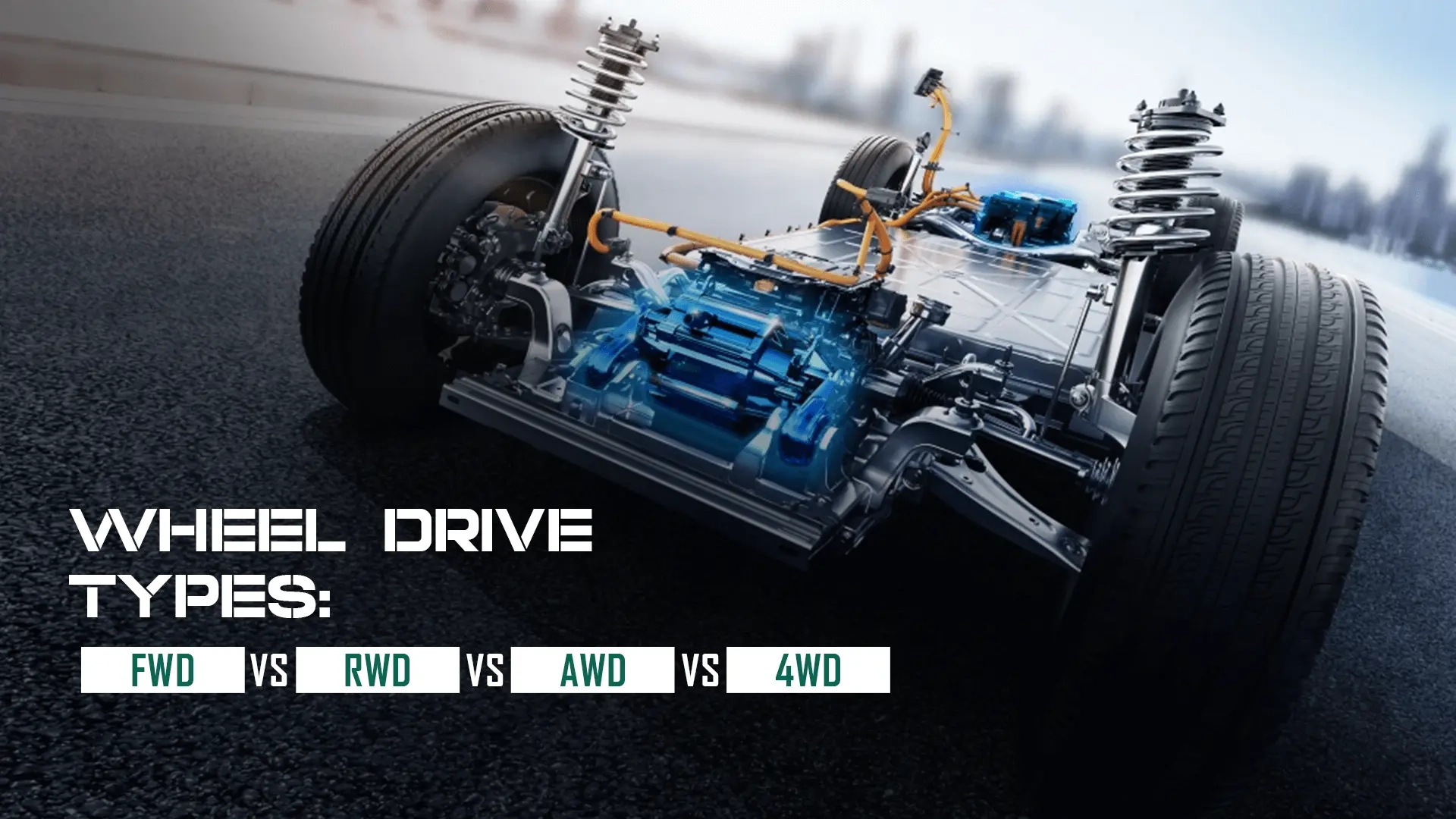
Wheel Drive Types: FWD vs RWD vs AWD vs 4WD
November 09, 2025
Wheel Drive Types: FWD vs RWD vs AWD vs 4WD
November 09, 2025
Are you prepared to get the family a new car? Well, understanding various features and wheel drive types is essential when choosing the right vehicle. Okay, we will discuss the wheel type for now.
Why is wheel drive type important, you might ask? Well, the way power is delivered to your car’s wheels affects performance, handling, traction, and fuel efficiency.
And there are four main types of wheel: Front-Wheel Drive (FWD), Rear-Wheel Drive (RWD), All-Wheel Drive (AWD), and Four-Wheel Drive (4WD). With this content, get informed about the wheel types and help yourself to make an informed choice.
The wheel receives power from the engine; describe the wheel drive type. The power distribution in wheels determines how your vehicle moves and performs in different driving conditions.
Cars with front-wheel drive (FWD) only use their engines to power their front wheels. Due to its efficiency and affordability, this configuration is found in the majority of contemporary cars.
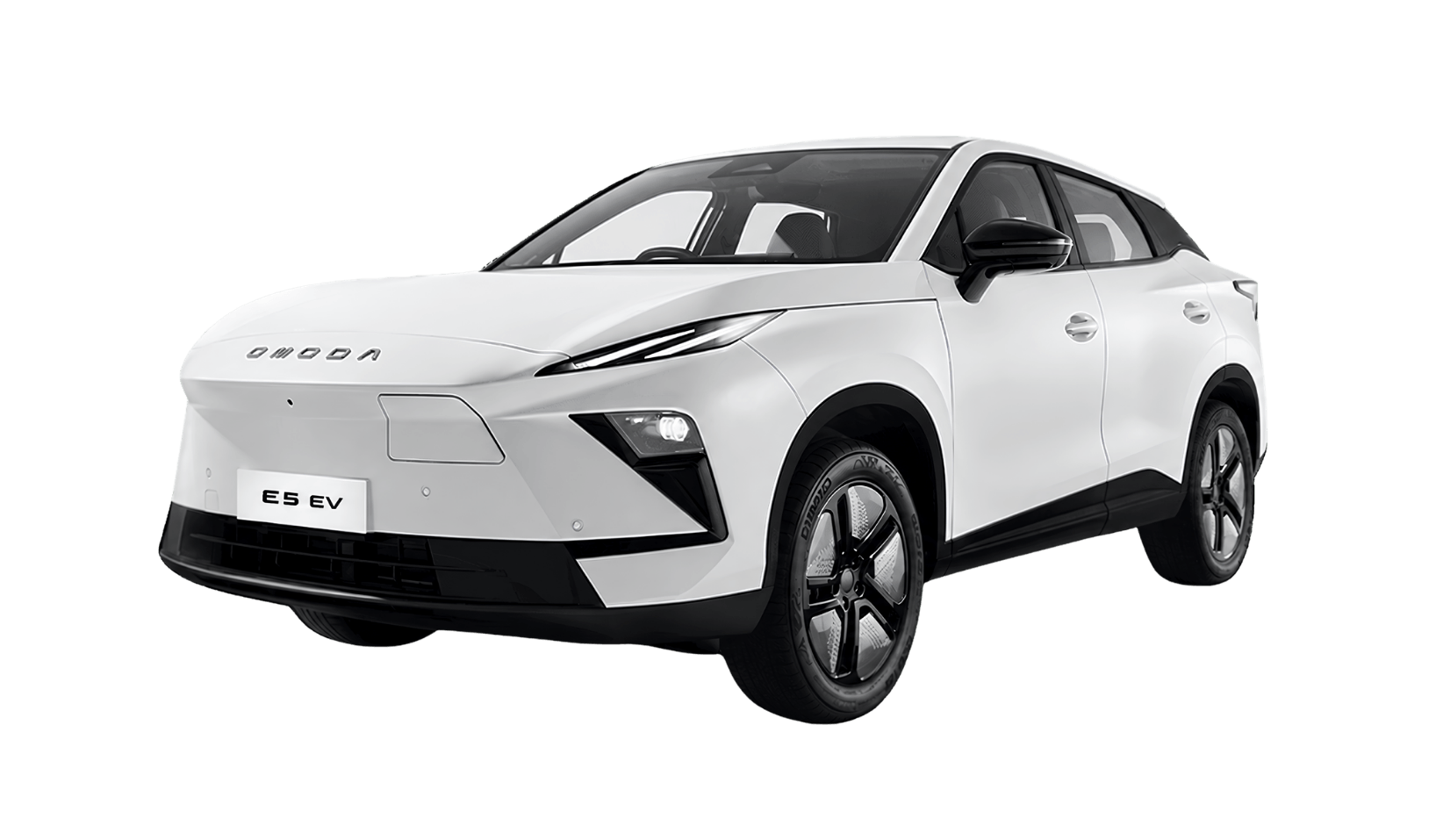
Our Jaecoo J5 and Omoda E5 both feature an FWD system, offering a smooth and efficient driving experience ideal for city and highway use.
Ideal for: City driving, daily commutes, and mild weather conditions.
Rear-Wheel Drive (RWD) vehicles send power to the back wheels. This type creates a balance between steering and propulsion. These features make RWD popular in sports cars and performance vehicles.
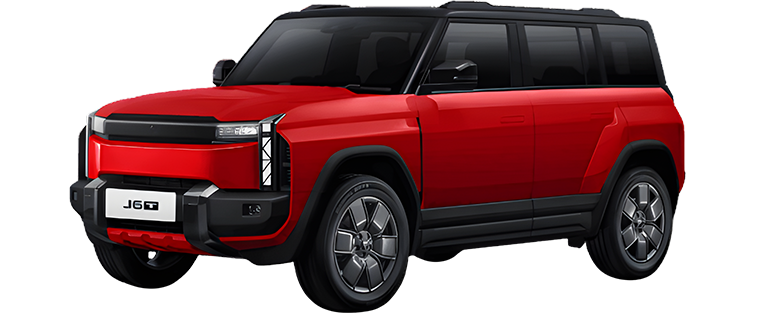
The Jaecoo J6, with its RWD setup, delivers enhanced balance and sporty handling for drivers seeking performance and control.
Ideal for: Performance enthusiasts and dry-road conditions.
In an All-Wheel Drive (AWD) system, the engine automatically sends power to all four wheels, adjusting torque as needed. This makes AWD vehicles versatile and ideal for changing road conditions.
It has high adaptability compared to others.
Ideal for: Drivers who face rain, snow, or mixed terrain regularly.
Four-Wheel Drive (4WD), which is commonly found in off-road and utility vehicles, allows drivers to manually apply power to all four wheels.
It’s built for rugged terrains and challenging conditions.
Ideal for: Off-road adventures, rough terrains, and utility driving.
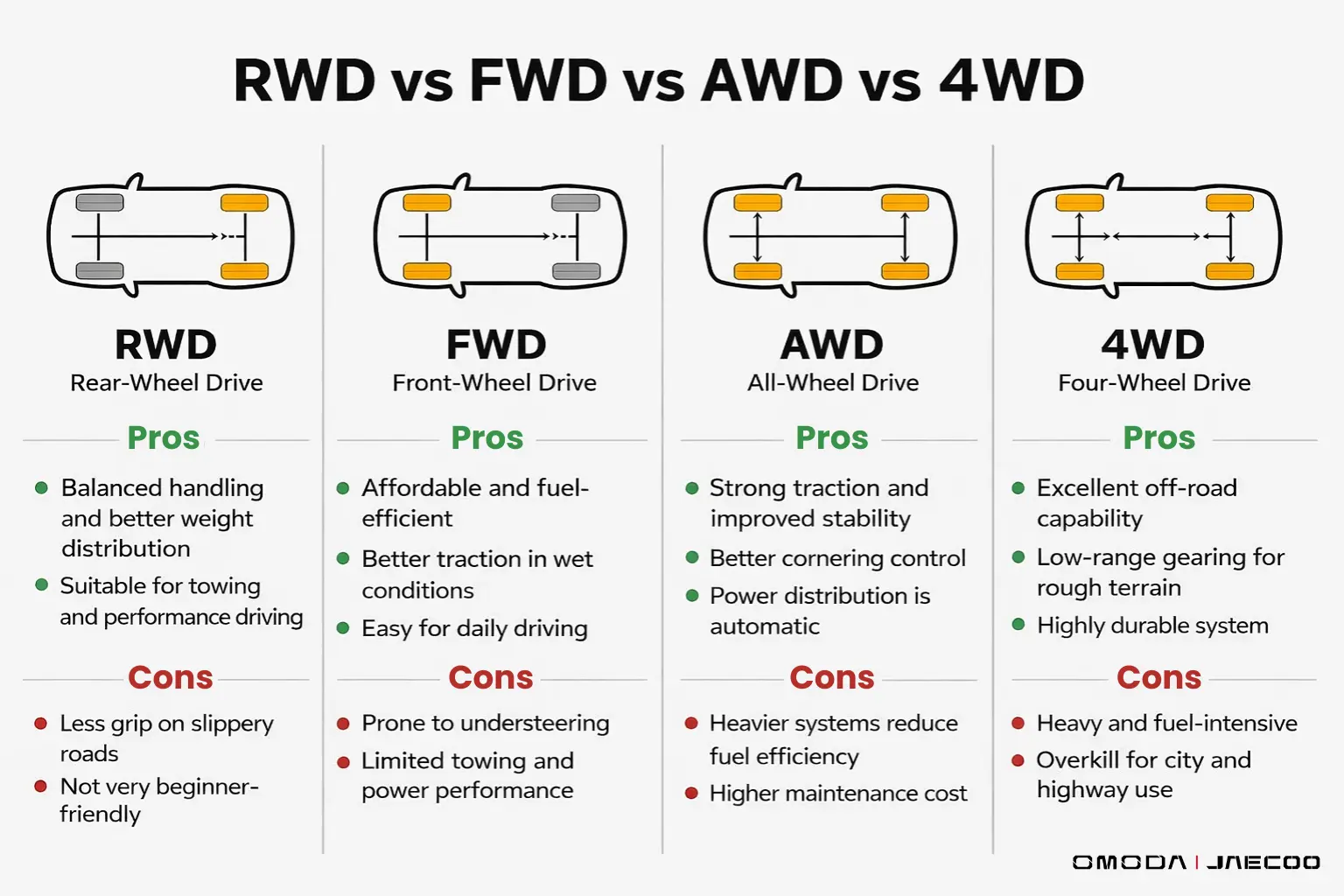
Your choice depends on where and how you drive:
Before buying your vehicle, understanding wheel drive types is very necessary. This helps you choose a vehicle that matches your driving needs, lifestyle, and environment.
Whether you value fuel economy, performance, or off-road power, knowing the difference between FWD, RWD, AWD, and 4WD ensures you pick the right system for the road ahead.
Knowing all these factors of the vehicle makes daily traction easy and manageable. You will have a better idea of its maintenance and power, which will help you have a better experience in your vehicle.
If you’re ready to experience advanced design, technology, and performance in your next drive, explore the latest range of vehicles from Omoda & Jaecoo.
Discover innovation and style crafted to elevate every journey.
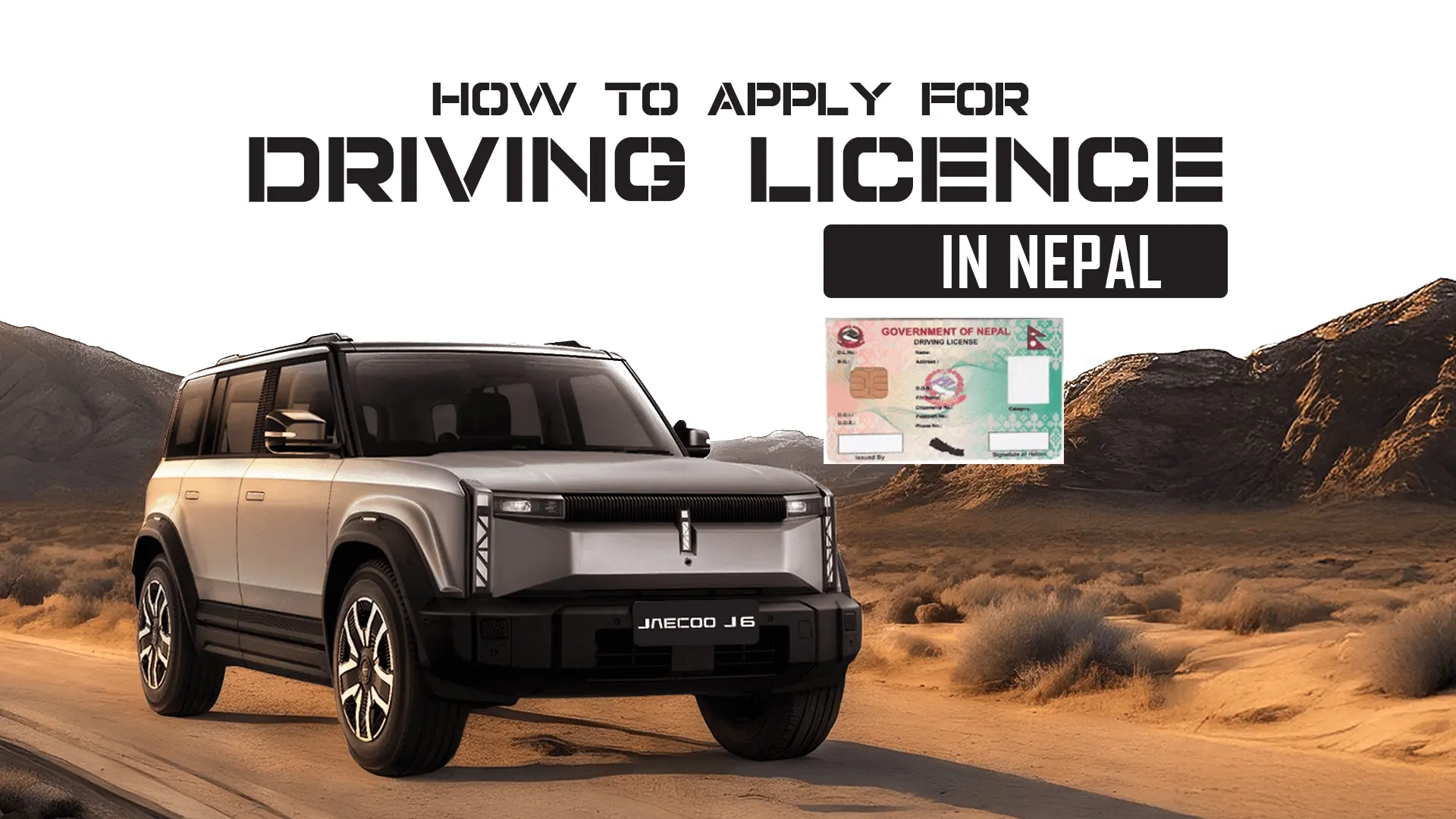
How to Apply for Driving License in Nepal?
October 15, 2025
How to Apply for Driving License in Nepal?
October 15, 2025
Getting a driving license in Nepal is now easier than ever. You can apply online through the Department of Transport Management (DoTM) in a simple and organized way.
Whether you want a license for a bike, car, or another vehicle, this guide on how to apply for a driving license in Nepal will walk you through the process step by step in easy words.
If you already have a license and need to update it, check our guide to renew your license or add a new category.
Follow the steps given below on how to apply for a smart driving license in Nepal.
Go to the official DoTM portal https://applydl.dotm.gov.np/login. This is where you will register and begin your license application. The website allows users to fill out forms, choose vehicle categories, and select preferred DoTM offices for processing.
Click on “Sign UP” if you are a first-time applicant.
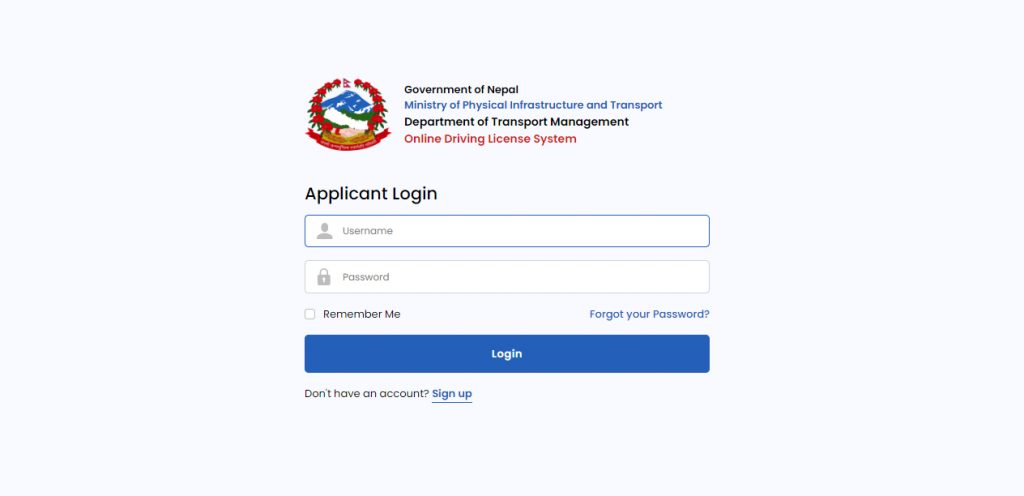
You will receive your new username in 000000-00000-0000 format; save it for future log-ins.
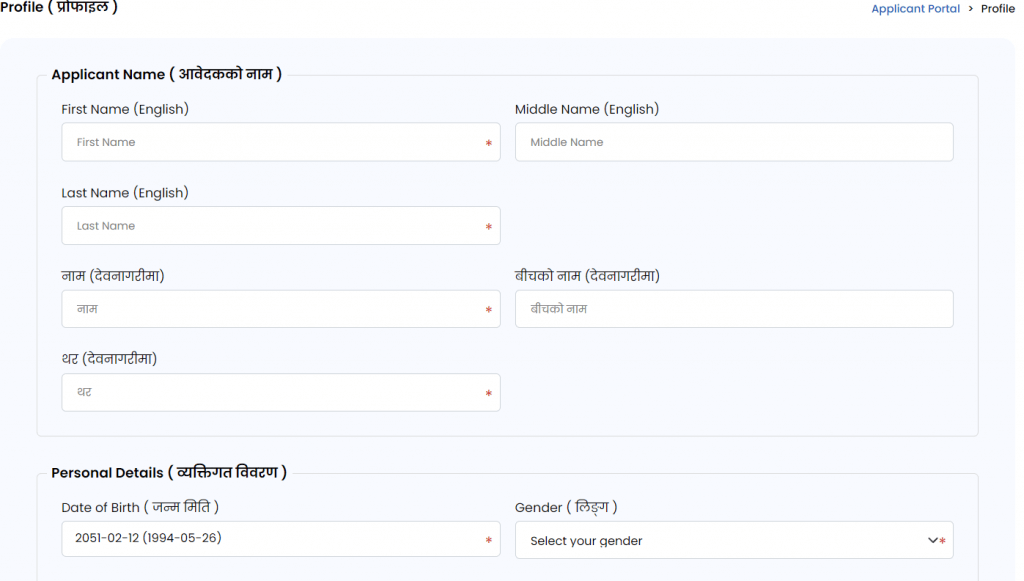
Once logged in, you will be redirected to a new dashboard where you will need to provide the following personal details. This step includes various categories of entry, such as
Also add your blood group and contact details where asked.
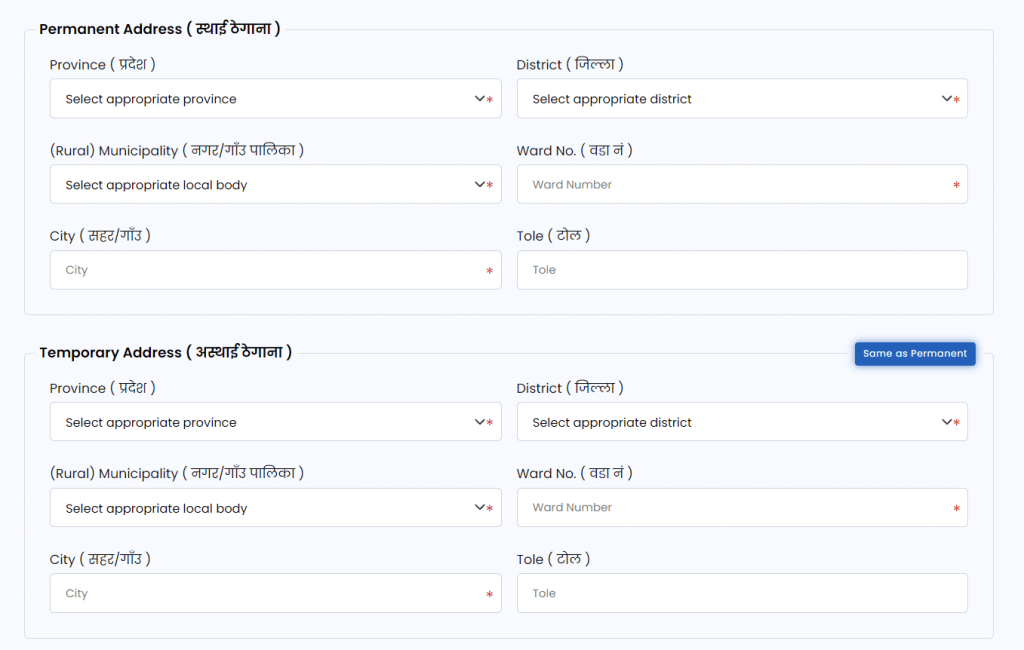
Upload your citizenship photo (back and front) while adding citizenship information.
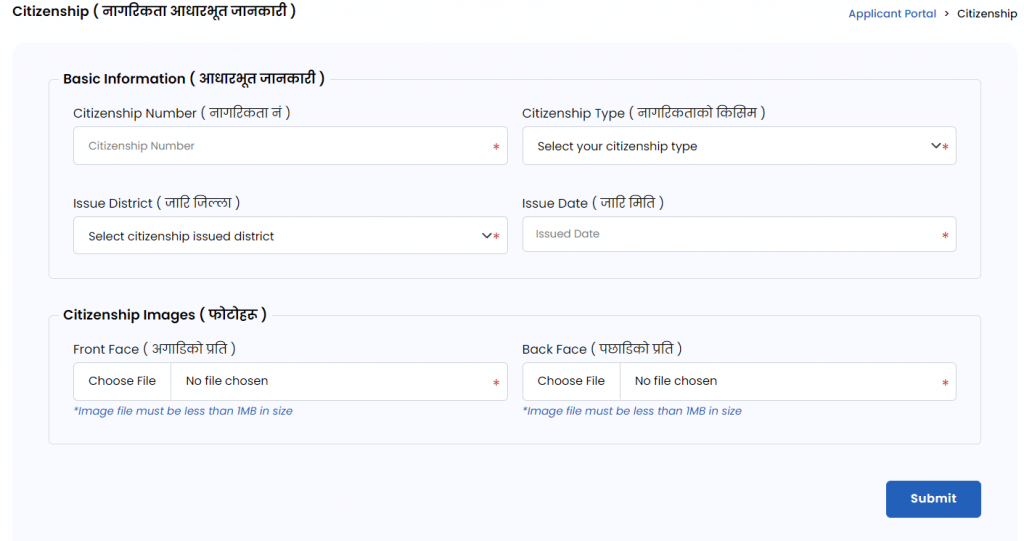

Ensure that all information matches your citizenship certificate exactly. Any mismatch may lead to application rejection.
Select the category of vehicle you want a license for:
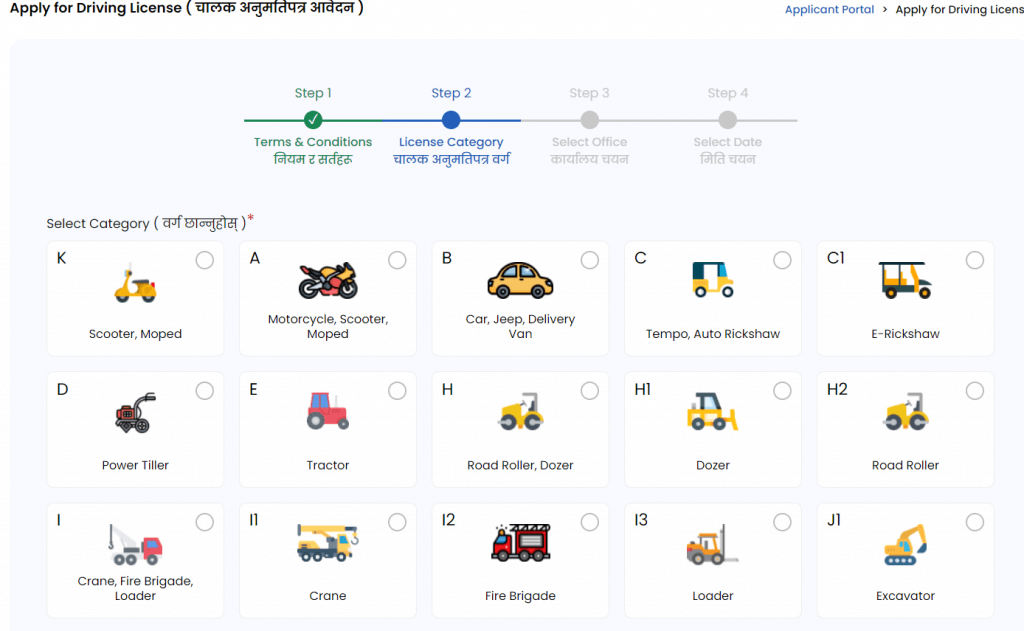
If you plan to apply for more than one category, you’ll need to repeat the process or add categories as instructed on the portal.
After providing all the information, accept the terms and conditions and select a category. Choose your Province and the nearest DoTM office for the test and license processing.
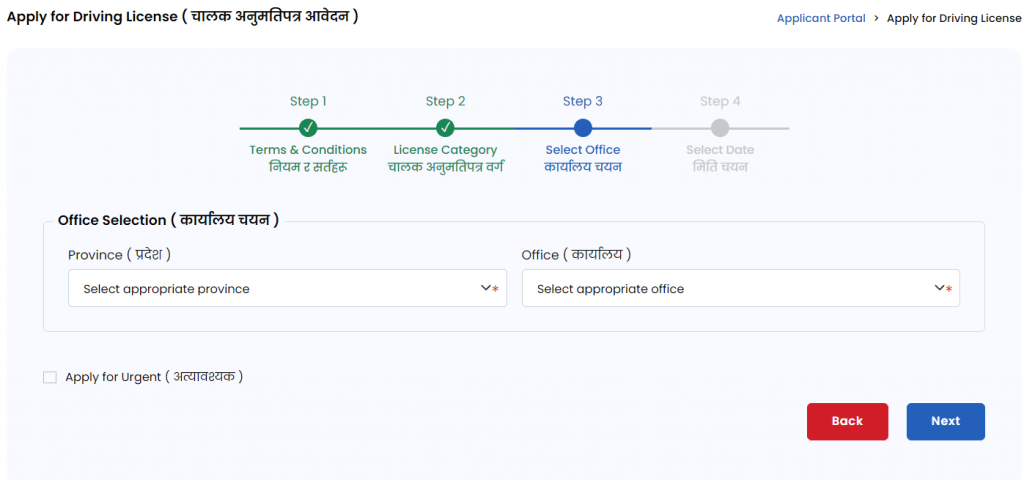
Each office has a limited daily quota for applications, so try to log in early in the morning when new slots open.
After selecting the office, choose your appointment date for biometrics and document verification. However, you can only choose days when the quota is still available. On the right side of the form, you can see the occupied days.

If all slots are full, wait until the next available date or check the system at different times, as cancellations can reopen slots.
Afterward, click on the apply button. An OTP will be sent to you at your registered mobile number for final verification. Enter the OTP to complete your online registration form.
You will be redirected to the homepage, where you can see your information and notification of application completion.
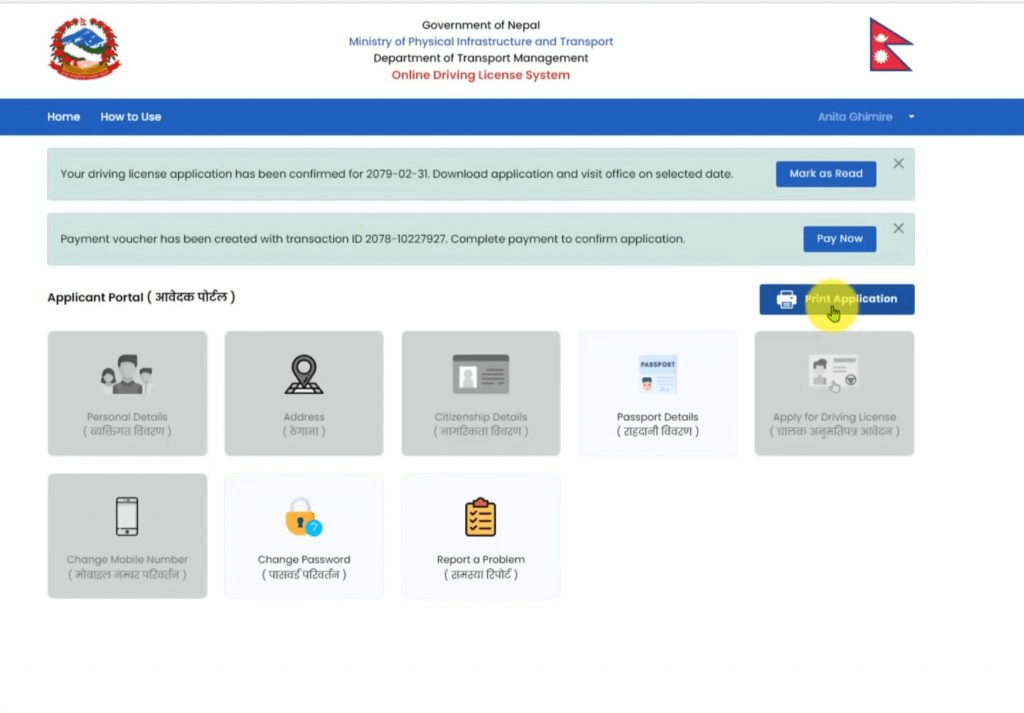
From the home page you can print the driving license application form. Download and print the form and attach your passport-size photo and your signature before submitting to the DoTM office.
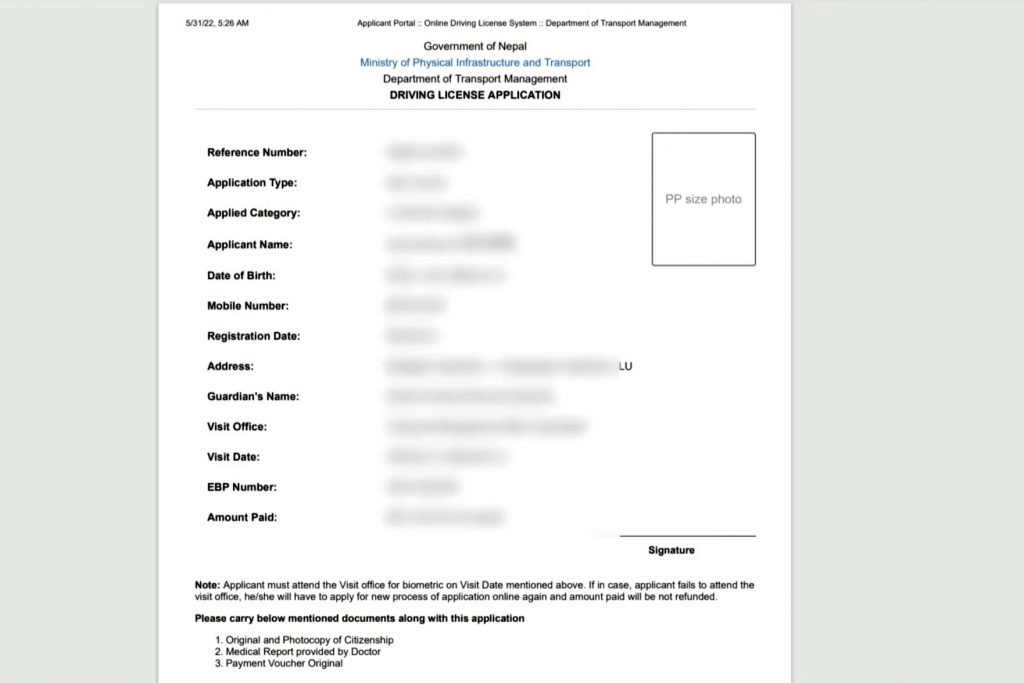
This printed slip must be taken to the DoTM office on your appointment date.
On your scheduled date, visit the chosen DoTM office with the following documents:
At the office, you’ll go through the following steps:
Note: You will need to pay the fee of Rs.500 for every trial.
After completing these processes, you’ll receive your written exam admit card and be informed about the exam schedule.
The written exam tests your knowledge of:
The exam is usually multiple-choice and conducted digitally or on paper.
You must score the minimum passing mark of 50 to proceed to the trial test. Results are typically published the same or next day on the office notice board or online.
If you fail, you can retake the written test after a short interval of 10 days (as per DoTM rules). Resubmit your documents along with your admit card to the DoTM office.
After passing the written exam, you will be scheduled for the practical trial test. This test assesses your actual driving skills.
For Two-Wheelers (Category A):
For Four-Wheelers (Category B):
In order to pass your trial exam, you will need at least 70 points for both kinds (2-wheeler and 4-wheeler).
You are allowed three trial attempts within 18 months of your written exam. If you fail all three, you must reapply for the license from the beginning after 90 days.
Once you successfully pass both the written and trial exams:
Until your card is issued, you may receive a temporary driving slip, which legally allows you to drive within Nepal.
When you receive the SMS or notification:
This card contains your personal details, vehicle category, license validity, and unique QR code for verification.
A Nepali driving license was generally valid for five years. But after a recent news update, a new policy extends driving license validity to 10 years for individuals under 60.
While those above 60 will retain a 5-year validity period for safety reasons.
You can renew it at the same office before it expires. Renewal involves a short medical check-up and fee payment—no written or trial tests are required unless the license is long expired.
How to Add Category & Renew License
With Nepal’s online driving license system, getting your license has become faster and more transparent.
However, due to high demand, appointment slots can fill up quickly—so plan ahead and double-check your details before submission.
Once you clear all stages, you’ll officially hold a Nepali driving license—ready to take the wheel of your new Omoda & Jaecoo vehicle with full confidence and legal assurance.
Nepal in Top of EV Adoption
September 16, 2025
Nepal in Top of EV Adoption
September 16, 2025
The current state of EV adoption is at full swing, as about 70% of cars being sold in Nepal are electric.
The constant engine rumble and air pollution from carbon emission vehicles are being replaced by quiet and carbon-free electric vehicles (EV) in the form of cars, jeeps, motorcycles, etc.
With changes in government vehicle policy and people's interest, the automobile industry is pivoting towards electric, making it a smart policy for the economy and environment.
Let's jump into why Nepal is adopting EV on an extensive scale.
Around 1995, the introduction of EVs in Nepal took place with three-wheelers (battery powered tempo) replacing diesel powered tempos.
The government started to understand the benefits of EVs towards the environment, yet the policies hardly changed for electric vehicles.
Small-scale projects like electric Safa tempos took place. Nepal Electricity Authority (NEA) started diving into electric vehicles and EV charging options.
The government introduced tax incentives on EVs so people can easily buy them, transitioning to EV adoption by making it cheap, with tax breaks, etc.
When the NEA solved load-shedding issues, and with government tax breaks, people started to adopt electric vehicles at a great pace.
Fast forward to today, electric vehicles are being used in a lot of areas with massive adoption and imports, fuel engines are being replaced, and we are heading towards green cities.
Adoption of EV
Started as an experiment to become one of the top importers: Nepal’s transition was not a quick shift but the outcome of years of awareness, policy shifts, and technical advancement.
The first introduction to the electric environment was through electric public transport, Safa Tempo, in Kathmandu Valley as a replacement for diesel tempos, which became an early environmental consciousness.
The cost of electric vehicles was high with minimal options; less knowledge, awareness, and technology didn’t attract consumers. The government policies did not favor it as well.
The advancement of technologies and increasing awareness led to growing adoption of electric vehicles.
The Nepal Electricity Authority (NEA) and the government played a critical part and are the main catalysts for this change. NEA started to deliver electricity at a stable rate as Nepal suffered extreme electricity shortages and load-shedding.
This stability brought a sense of safety among consumers, as electric vehicles consist of batteries and need to be recharged before use, and this can be done at home.
The recharge price with electricity is far cheaper than filling up with petroleum products as well; the extensive rise in petroleum products with no tax breaks started to be a pain point for consumers, making them ditch fuel emission vehicles.
The government played its role by changing policies for electric vehicles regarding import tax. They slashed the import duties for EVs but kept the fossil fuel high so people would switch to EVs.
This decision led to hypergrowth in electric vehicle adaptation, like cars, jeeps, motorcycles, etc., which increased imports and sales domestically and lowered noise and air pollution to some extent.
Since then the use and adaptation of EVs towards public transportation has shown exponential growth. Now NEA and private companies have introduced charging stations where electric vehicles can be recharged similarly to petroleum stations at different locations.
According to the Department of Customs, the import of electric vehicles has grown above 70% in 2024 compared to the import in 2023 and is growing rapidly in Nepal.
Like the Omoda E5 from Omoda & Jaecoo Nepal, which in 2024 got 300+ bookings in their launch month. This shows the adaptation and glimpse of the future vehicle scene.
The future seems to be electric vehicles, and to make it faster, Nepal needs to grow and improve its stations and infrastructure, especially along highways for long drives to counter recharging issues.
The national grid needs an upgrade so it can sustain electricity demand for home recharging. The biggest challenge would be creating a circular economy for battery recycling and disposal to make the entire ecosystem sustainable.
This benefits both people and the environment.
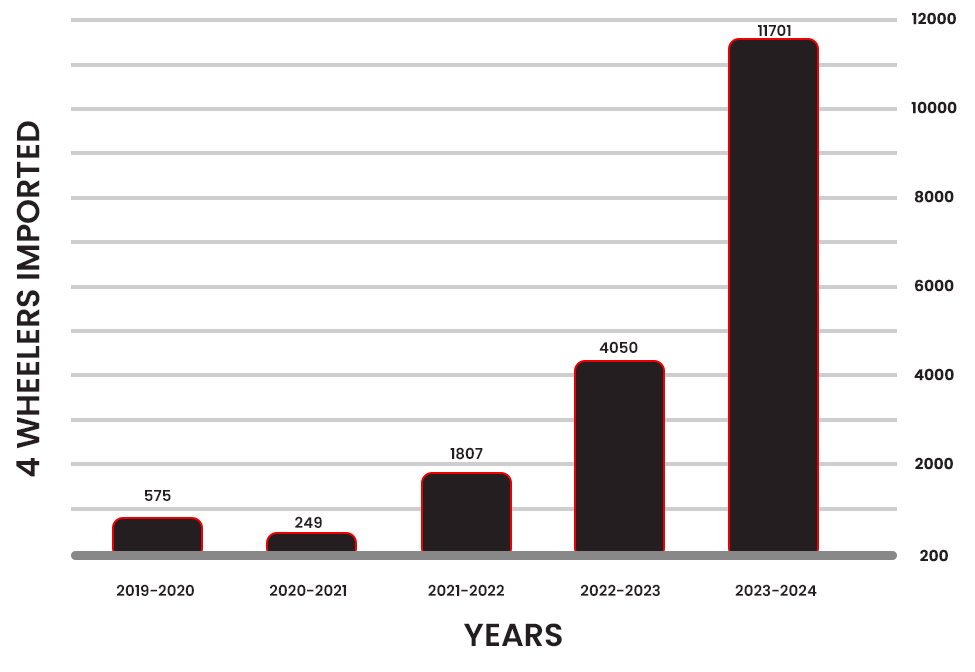
The above graph is the reference from the Department of Customs, Kathmandu, which shows the number of electric vehicles imported in each Fiscal Year.
The Department of Customs states that during FY 2022-23, the import grew above 65%. This upward trend continued in FY 2023–24 and is expected to rise further in the current fiscal year, 2024–25.
The mass EV adoption in Nepal is happening due to all of the positive aspects discussed below.
Though adaptation of electric vehicles is at an all-time high, there are things you need to be aware of, mentioned below:
Learn About the EV Tax in Nepal
It depends on factors like the charger and battery. Home charging takes about 6-9 hours for a full charge with a standard wall outlet. It takes about 1-3 hours to reach 80% with a public fast charger. If the supercharger is near you, it takes about 1 hour to reach 80%.
The stations are growing but still concentrated in Kathmandu and other major cities. Charging stations are expanding in city areas, though they have not reached rural areas.
Even though there are no cash subsidies, there is heavy tax relief on importing an EV, making them considerably cheaper than petrol or diesel vehicles.
For most electric scooters and small EVs, a standard 220V outlet is enough. For bigger EVs like cars, it’s advised to install a special EV charging point for safety and faster home charging.
Yes, in the long run, EVs are cheaper. Recharges for EVs are very low compared to petrol/diesel. The maintenance cost is also relatively low with fewer moving parts. Import tax breaks make it look cheap.
Nepal shows positive statistics on sales, imports, and usage towards electric vehicle adoption.
This change is driven by strategic EV tax incentives, hydropower, and increasing health awareness but needs to fight challenges like expensive upfront costs and lack of charging infrastructure.
With further investment in grid updates and a circular economy of batteries, Nepal will achieve exponential growth in EV adoption and clean cities in the upcoming future.
This journey towards a cleaner, energy-independent future is rocky but achievable.
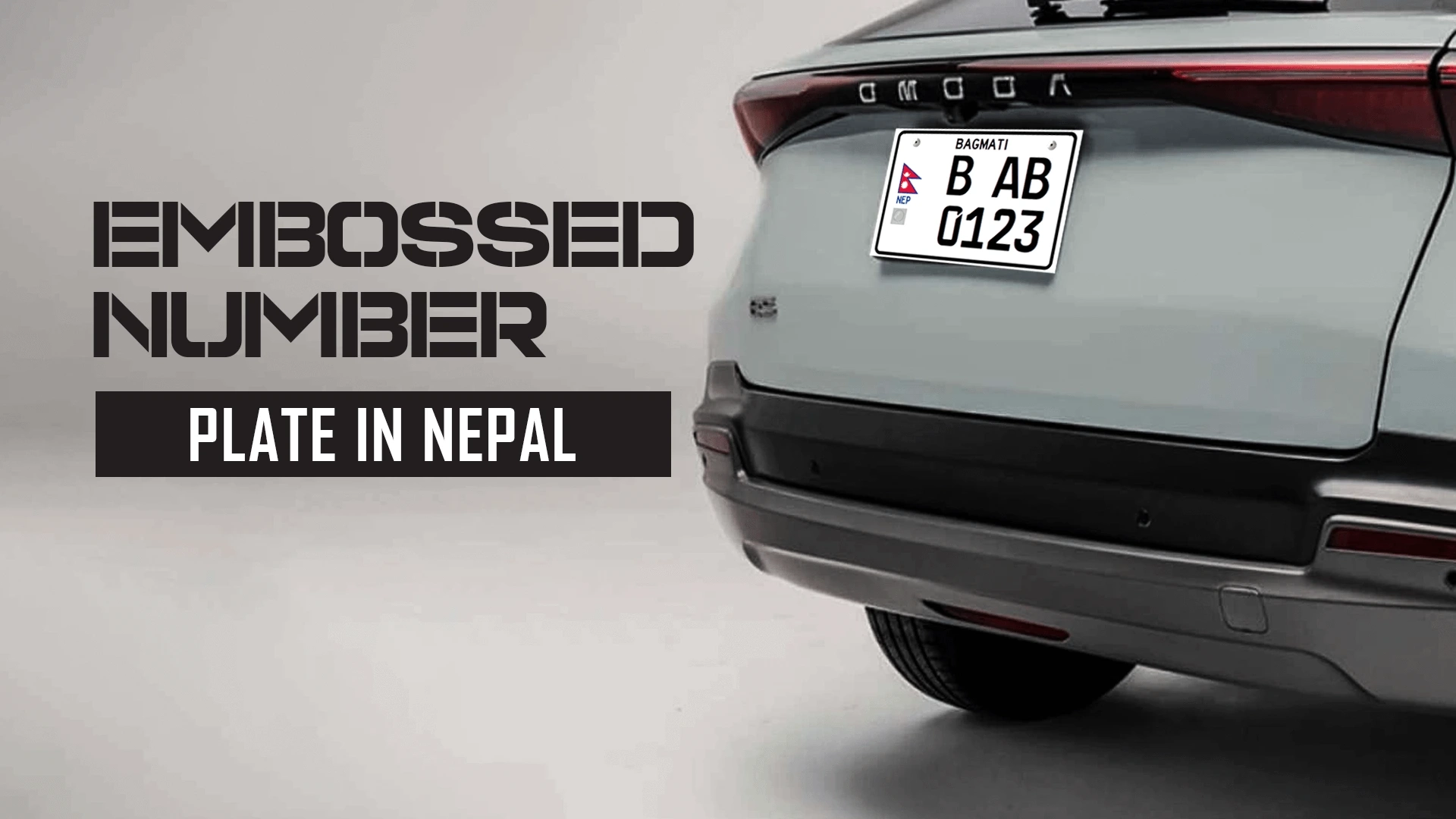
Embossed Number Plate in Nepal
September 04, 2025
Embossed Number Plate in Nepal
September 04, 2025
Back on August 5, 2025 a decision from a thematic committee meeting asked for embossed number plates to be made mandatory across Nepal from Asoj 1, 2082 (September 17, 2025).
These plates are made of durable aluminum with raised characters, have a reflective finish, and include an embedded RFID chip that connects each vehicle to a central database.
The policy is intended to standardize vehicle identification, reduce forgery, and pave the way for digital transportation services.
Yet, questions remain about capacity, affordability, and readiness. Many criticized this matter, as the public saw a burden/load coming in their head for no reason.
As for now the decision has been slightly changed due to public demand and is made compulsory for newly bought vehicles only. Further decisions and initiatives are on hold.
Note: If you already have a license, check out our complete guide on how to add a category and renew your license in Nepal.
An Embossed number plate, also known as an Electronic Vehicle Number Plate (EVNP), is a high‑security aluminum plate where the alphanumeric characters are pressed (raised) rather than painted.
It has an RFID (Radio-Frequency Identification) microchip embedded to store and verify key registration data of the owner. And it has a tamper‑resistant, standardized format for consistency and enforcement.
Color coding remains consistent with existing conventions while adding digital capability:
This uniform scheme makes visual identification quick, while the RFID chip enables electronic verification.
The mandate is intended to deliver public‑interest benefits and modernize governance:
Follow these steps to complete your EVNP application:
Fill in Required Information of Vehicle and OwnerThis information can be found in your bluebook (bill book).
Vehicle Information
Owner Information
Non‑compliance from Asoj 1, 2082 triggers escalating consequences:
Note: For now the government has held down the “compulsory” tag, so owners of old plates need not worry about these rules.
For smooth and credible implementation, the following actions are essential:
A Guide to Driving License Application in Nepal
Embossed number plates aim to improve security, standardize identification, and facilitate e-governance in Nepal's transportation system. The concept is sound; the challenge is execution.
With realistic timelines, completed RFID infrastructure, expanded capacity, and clear public communication, the rollout can shift from controversy to credibility—delivering tangible benefits for citizens, operators, and regulators alike.
While the government doesn't have proper set rules for the urgency of this system.
But it is advised for new buyers and owners of Omoda and Jaecoo to apply for their embossed number plates for their vehicles.
You should also keep in mind that sooner or later you will be needed to add to the system, so work on it as suited for you.
From Asoj 1, 2082 (September 17, 2025) for all vehicle categories.
NPR 2,500 (two‑wheelers), NPR 2,900 (three‑wheelers), NPR 3,200 (four‑wheelers), NPR 3,600 (buses/large vehicles).
No. Road tax renewal and ownership transfer may be blocked until your vehicle is EVNP‑compliant (as for now, a new voice under the hold of this subject is yet to come, so we can say that you can renew your tax and transfer ownership even without EVNP).
To curb forgery/theft, enable digital verification, improve tax compliance, and create a standardized national system that supports future online services.
Yes. You must attend biometric verification at a Transport Management Office before issuance.
Citizenship or company registration/PAN, Bluebook (copy + original), latest tax clearance, bank approval letter (if financed), and payment proof.
Some infrastructure is in place, but full readiness requires completing scanning gates, control rooms, and network connectivity across key corridors.
The system currently follows standardized formats. Depending on the policy, bilingual options may be included.
Expect fines, temporary service restrictions (tax renewal/transfer), and possible road‑use limitations until you comply—this was based on a previous decision, but for now you won’t face any charges.
Timelines vary by location and office capacity. Applying early and keeping documents ready helps avoid delays.
EV vs Petrol/Diesel Car
August 21, 2025
EV vs Petrol/Diesel Car
August 21, 2025
EVs have become increasingly popular in recent years. This has made a huge turning point in the automotive industry.
The ongoing debate of EV vs Petrol/Diesel car are no longer about personal preference but more about cost, performance, and the environment.
While the government around the world is pushing for electric cars, new innovations are arriving every year. Let us dive deeper into the key differences between these types of vehicles.
Discover key differences in cost, performance, and environmental impact in this blog. Make the right choice before you buy your next purchase. Make your investment worth it and make the right purchase.
An Electric Vehicle runs on electricity stored in rechargeable batteries. It uses an electric motor powered by a battery. Which can be recharged time and again. It offers a more sustainable alternative to traditional vehicles as it produces. Zero tailpipe emissions. This helps to control air pollution and greenhouse gases.
A petrol/diesel car is a vehicle that is powered by an internal combustion engine (ICE) that uses either petrol or diesel fuel to generate power. It has been the favored car over the last 50 years.
It is liked for its quick refueling capacity and long-distance travel capability, but it is also a major reason for air pollution and greenhouse gases.
EVs are more environmentally friendly, as they have zero emissions while driving.
While the elements of the batteries, like lithium, cobalt, and nickel, have a negative environmental effect over their lifetime, the EV cars have a much smaller carbon footprint.
Research in battery recycling will further reduce the carbon footprint of an electric vehicle.
Petrol and diesel cars produce a huge amount of emissions directly from burning fuel for power. It is a great contributor to the air population and climate change.
Even the modern, efficient engines have greater emissions than EVs. These areas are prone to releasing nitrogen oxides, which are harmful to human health.
EVs often have more advanced technologies in them. Features like over-the-air updates, advanced infotainment systems like in-car entertainment, audio controls, navigation, climate control, smartphone integration, and automatic driving features.
They also include regenerative braking systems, smart energy management, and AI-powered driving features.
ICE is less tech-heavy and more often requires manual efforts. This can make it an easier option to repair in remote areas, but the overall technology provided in an electric car is far superior to a petrol or diesel car.
Maintenance is a lot easier in EVs; there are no oil changes, fewer fluids in them, and fewer moving parts than a typical car. It will also require less frequent maintenance.
The brakes are also protected by the regenerative braking feature. The most essential checks will be of battery health and software updates.
ICE cars have a much bigger maintenance cost, as they require frequent oil changes, exhaust checks, and more mechanical servicing. These will lead to high lifetime maintenance costs.
They will also require a change of spark plugs, air filter, fuel filters, and timing belts. The complexity of these changes can also lead to huge bills.
EVs have a much lower resale value than a typical car. Battery degradation, tech updates, and charging infrastructure can play a huge role in the resale value.
Models from reputable brands with long battery warranties have better resale value compared to others.
But the new international rules, like not being able to own a fuel car older than 20 years, can play a significant role in deciding the resale value of cars.
If you look at the past data, the resale value of ICE cars is much higher. But due to the new government rules, that may all change.
Larger engines and luxury cars will still have good resale value, but the stricter emission standards can depreciate the value of normal petrol/diesel cars.
| Feature | EVs | Petrol/Diesel Car |
|---|---|---|
| Purchase Price | Higher | Lower |
| Running Costs | Lower | Higher |
| Maintenance | Lower | Higher |
| Range | Moderate | Higher |
| Refueling/Charging | Slower | Faster |
| Environmental Impact | Low | High |
| Tech Features | Advance | Moderate |
If you are currently planning on switching to an EV or buying a new car, think no more because the technologies in EVs have made them convenient for every situation.
If you are looking for an ideal EV that suits your taste and has a wide range of selection, go for OMODA & JAECOO.
The OMODAJAECOO provides buyers with a wide range of selections with advanced features; from EV cars for city life to off-roading, it has it all.
The shining part is that the charging stations for Omoda & Jaecoo EVs are spread throughout Nepal, so travel with ease with Omoda & Jaecoo.
EV vs Petrol/Diesel car debate will always come back to personal preference, usage, budget, and requirement. If the new technologies, lowest running cost, and green vehicle are what you're looking for, then an EV will be the ideal choice for you.
But if you don't look for these qualities but want long-distance roadability and quick refueling and live in a place with fewer charging stations, then petrol or diesel can be your option.
We all know electric will be the future, but the right choice depends on your personal wants and needs.
As time passes by, technology and policies will evolve, and then EVs will be the clear-cut winner between the two.
Yes, EVs are much cheaper than other types of cars because electricity is far cheaper than fuel per mile, and the maintenance costs are also lower when compared.
It is not entirely certain that ICE cars will be banned in the future, but many countries are planning to phase out their sales by 2035. They can still be owned by their usability, and their resale value will decline.
Typically, it will take around 6 to 10 hours to charge your electric car to a full battery. The charging speed will be different according to battery size and charging speed.
Yes, electric vehicles require less maintenance, as they have fewer moving parts, require no oil changes, have reduced brake wear, and have lower maintenance costs.