Nepal's EV Charging Network: Where You Can Charge & How to Plan a Trip?
August 12, 2026
Nepal's EV Charging Network: Where You Can Charge & How to Plan a Trip?
August 12, 2026
· The EV charging network is growing quickly in Nepal, with stations located in key cities and along the main highways.
· Public EV charging stations are becoming more common in Kathmandu, Pokhara, Chitwan, Biratnagar, Butwal, Nepalgunj, and other major cities.
· NEA Charge, NepalEVs, GadiCharge, ElectriVa, AirCharge are some of the applications that assist the driver to find the charging stations and plan their route with confidence.
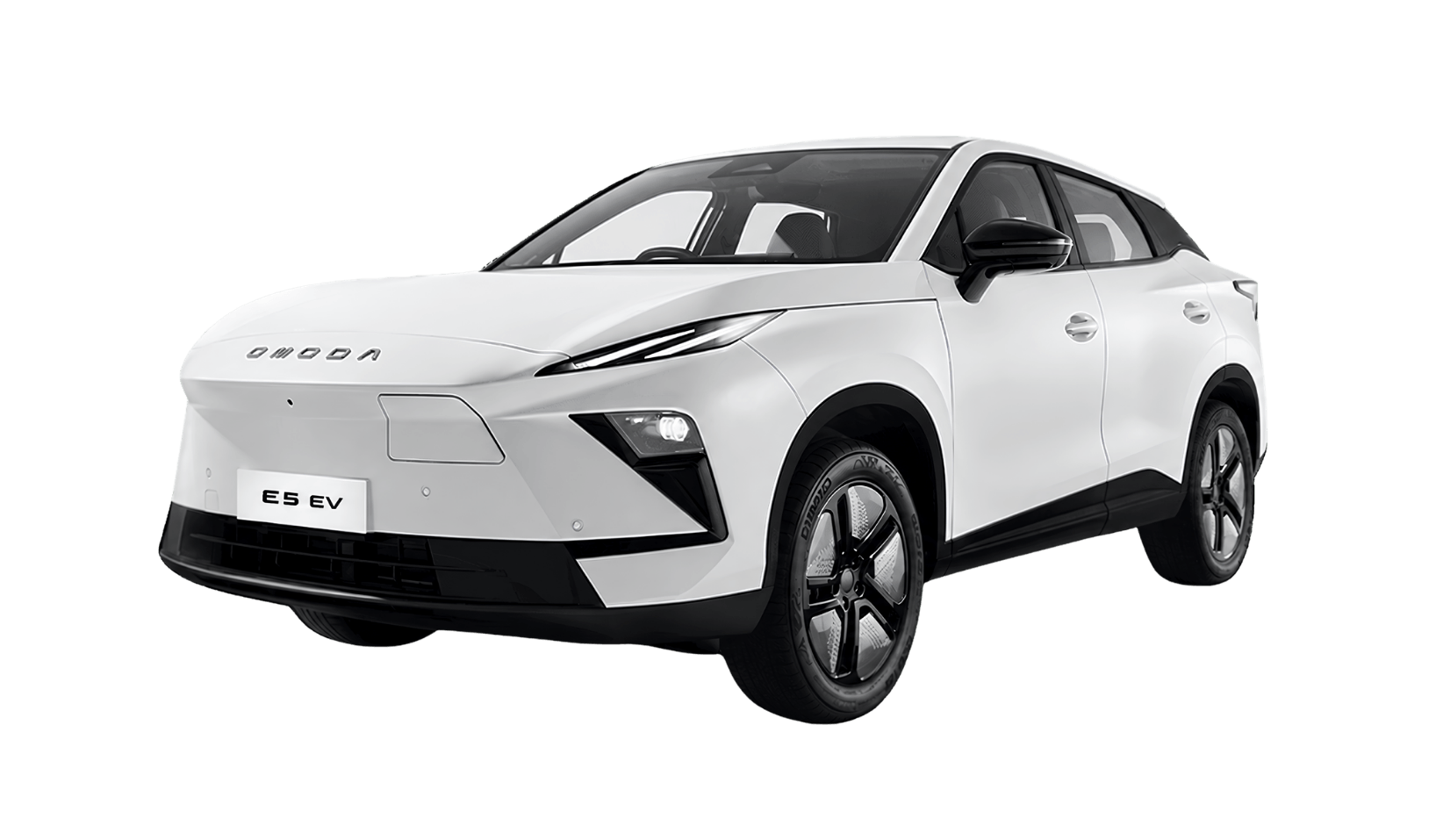
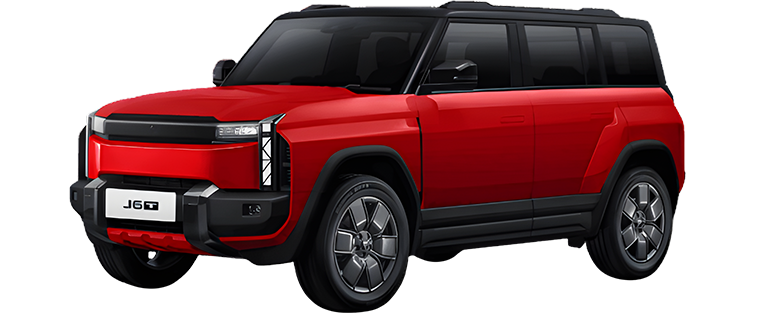
· Omoda and Jaecoo EVs are compatible with most public charging stations in Nepal, as they are enabled with CCS2 and Type 2 standards.
· The home charging station is the best choice for daily driving, and fast chargers are the most feasible solution for long-distance travel by EV.
· The adoption of smart route planning and expanding charging stations is helping alleviate EV range anxiety in Nepal.
The EV market in Nepal has grown significantly in the past few years. Previously, a hurdle to getting on board with an EV, access to charging stations has become one of the best arguments for going electric.
In recent years, EV charging stations have been installed across major cities, tourist hotspots, and key highway routes in Nepal, facilitating long-distance EV journeys more conveniently than ever before.
EV drivers can now travel with a level of confidence unheard of a few years ago, thanks to fast charging stations, real-time charging apps and convenient home charging solutions.
This is a major change for Omoda and Jaecoo owners. With access to a growing charging ecosystem, modern CCS2 fast-charging compatibility, and intelligent route-planning tools, every journey.
Every day the city commutes, weekend road trips, and it's easier, more efficient, and more fun.
This guide focuses on the best EV charging stations in Nepal, the applications that facilitate easier planning, charging station costs, EV charger compatibility, and what EV drivers such as Omoda or Jaecoo should know about taking advantage of the country's expanding EV charging infrastructure.
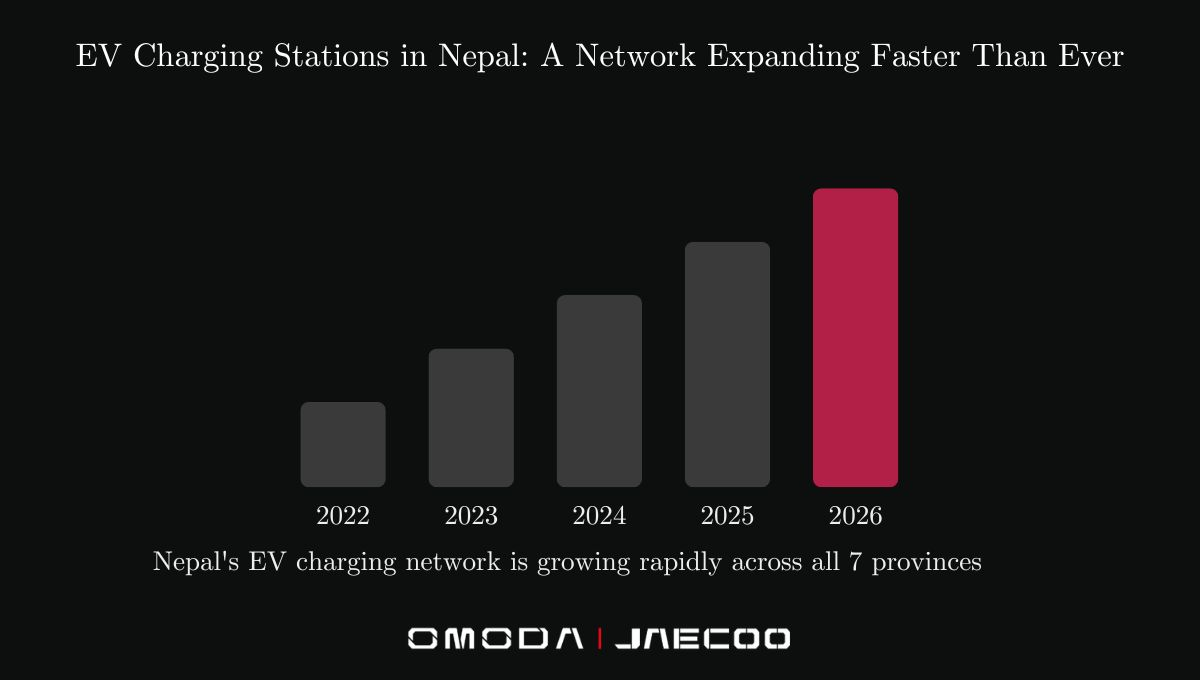
In recent years, Nepal's EV charging infrastructure has been significantly expanded.
According to the Nepal Electricity Authority (NEA), the utility currently operates 62 DC fast-charging stations across the country. Meanwhile, NepalEVs maps 335 charging sites and industry studies indicate that the ecosystem could now have more than 1,000 working charging points, counting charging stations, charging guns and private charging points.
These numbers illustrate one thing, which is that the charging network for EVs in Nepal is not restricted to Kathmandu Valley. There is a growing number of public electric vehicle charging stations throughout cities, tourist destinations, and transport hubs.
This growth is helping alleviate one of the main concerns of potential EV buyers: EV range anxiety. The more charging stations in the country, the more convenient it will be for people to use EVs for their commutes and long trips.
Considering a switch to an EV?
Speak with our team to gain more information about home charging, charging compatibility, ownership costs, and the best Omoda and Jaecoo model for you.
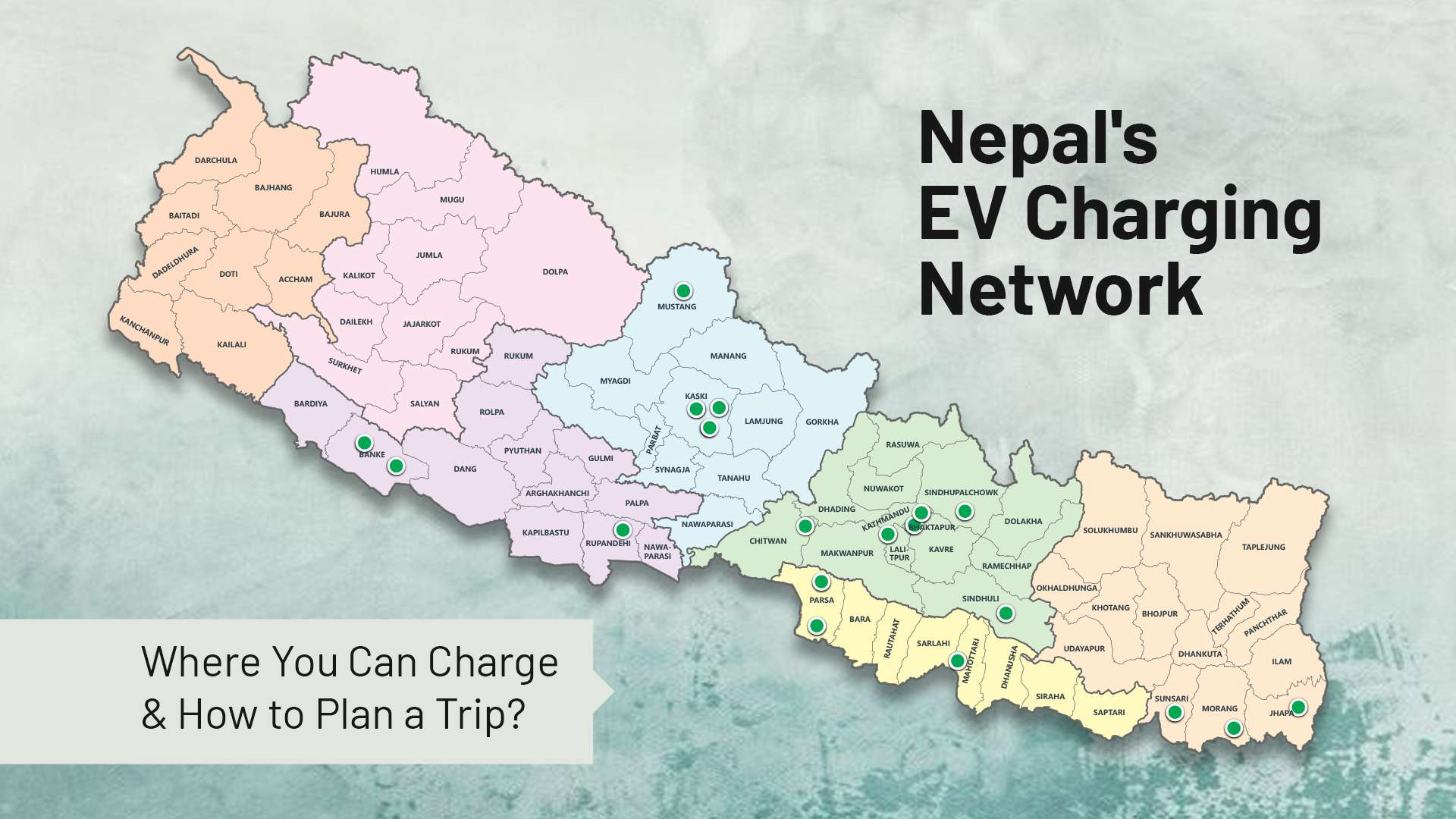
The EV ecosystem in Nepal is still centered around Kathmandu, with the most public EV charging stations here.
Omoda Jaecoo Nepal's charging network encompasses key locations in Sitapaila and Uttardhoka, and the larger network covers major cities and destinations such as:
· Pokhara
· Biratnagar
· Butwal
· Sindhuli
· Jhapa
· Sunsari
· Mahottari
· Banke
· Sindhupalchowk
· Nepalgunj
· Birgunj
· Mustang
With the number of EV charging stations increasing in Kathmandu and Pokhara city, a number of EV owners can now access charging facilities while shopping, eating or working or while staying overnight in the city.
One of the most important EV charging infrastructure developments in Nepal is the expansion of highway charging.
Omoda Jaecoo Nepal has been working to ensure charging stations are available on major highways and checkposts roughly every 60 km, assisting drivers to make informed choices on road trips beyond the city limits.
Route planning for EV travel in Nepal is easier than it was several years ago. Drivers can now find charging stations in advance and plan charging stops seamlessly.
The following are some of the popular routes that are well connected with public charging stations:
· Kathmandu–Pokhara corridor
· Kathmandu–Chitwan corridor
· East-West Highway segments
· Major tourism routes across Nepal
The premium EV ownership experience involves more than just the car. It's also critical to have reliable charging data.
To find public EV charging stations in Nepal, check their availability, and plan your trip more efficiently, several apps and platforms have been developed for drivers.
NEA's official charging platform gives you access to the charging stations and charging information in public.
Users can find and get directions to nearby charging stations, then pay for charging through the GadiCharge app.
There are currently over 50 charging stations at ElectriVa, available for both CCS2 and GB/T, ranging from 30 kW to 180 kW.
AirCharge has built one of the biggest private charging infrastructure ecosystems in Nepal with over 16 high-speed charging stations and 200+ charging guns.
NepalEVs provides an EV charging map, EV route planner, EV charger information and real-time station data.
One of these platforms can be used to check accessibility of chargers, along with compatibility of connectors, before embarking on any highway trip.
The standard of your vehicle's charging system can make a huge difference in the charging experience.
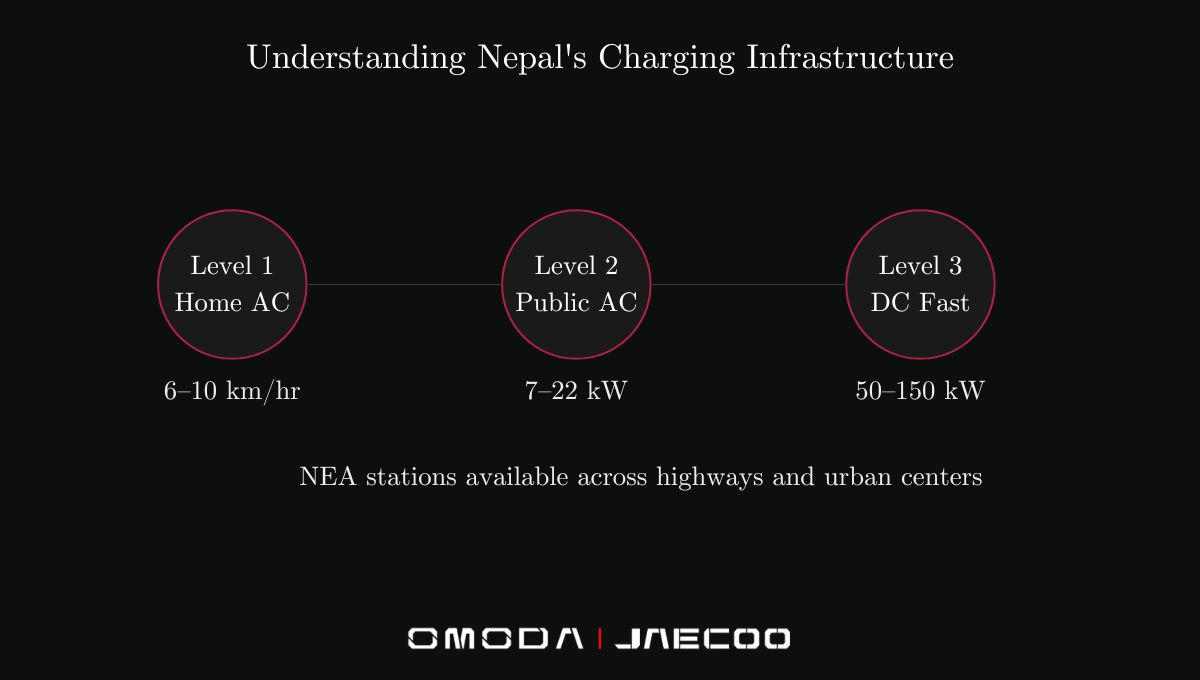
Omoda and Jaecoo vehicles offered in Nepal are compliant with global charging standards and are supported by the expanding charging infrastructure in Nepal.
|
Charger Type |
Connector |
Typical Power |
Typical Charging Time |
|
Home Socket |
Standard household socket |
Low-power charging |
Overnight charging |
|
AC Wallbox |
Type 2 |
7–22 kW |
Approximately 4–10 hours |
|
DC Fast Charger |
CCS2 |
Up to 130 kW+ |
Approximately 28–45 minutes (30%–80%) |
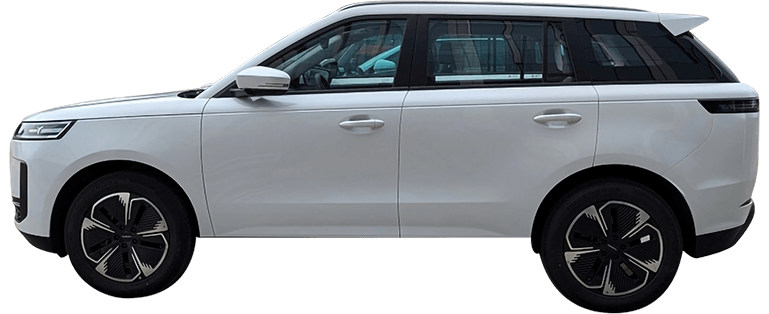
The Jaecoo J5 is compatible with CCS2 and Type 2 charging, enabling access to most of the latest EVs charging stations in Nepal.
The bottom line for most drivers is:
· Use Type 2 for AC charging.
· DC fast charging with CCS2.
· Check the compatibility of connectors before embarking on long distance travel.
Modern EVs in Nepal are increasingly adopting CCS2, helping make public charging more standardized and convenient.
Public charging continues to grow, but home charging is the basis of EV ownership.
Omoda and Jaecoo owners charge at home for everyday driving and at public fast charging stations for longer journeys.
All EVs have a portable charging cable included, which can be plugged into a standard household outlet.
Many drivers find that they can charge overnight without making major changes to their lifestyle to get the power they need for commuting during the day.
A dedicated Level 2 wallbox charger is recommended for greater convenience of ownership.
The charger's range between 7kW and 22kW rates and can charge most EVs in about 4-10 hours, which is great for long hours of charging overnight.
Based on our ownership guide, we estimate setup costs at home to be around NPR 20,000; however, final installation costs can vary depending on the wiring needs and the configuration of the property.
When charging an EV at home in Nepal:
· Hire an electrician (using a qualified one).
· Use a separate circuit for charging.
· Discuss electricity tariff options with NEA.
· Use manufacturer guidelines for safe charging.
Apartment owners should consider metered parking sockets or own EV charging facilities, if available.
There are many benefits to owning an EV, including reduced operating expenses.
Electricity rates depend on how much power is used and where it is charged, but home charging is far more cost effective than fueling a similar petrol or diesel car.
In general:
· Home charging is typically the least expensive form of charging.
· Public AC charging is convenient for destination charging.
· DC charging is the fastest charging but can be more expensive than home charging.
Running cost of EVs is usually much less than the running cost of conventional fuels for a similar distance of travel even if they are using public fast charging stations.
Lower charging costs are still one of the biggest drivers for many drivers to consider switching to electric mobility.
The journey to success with EV travel starts at home.
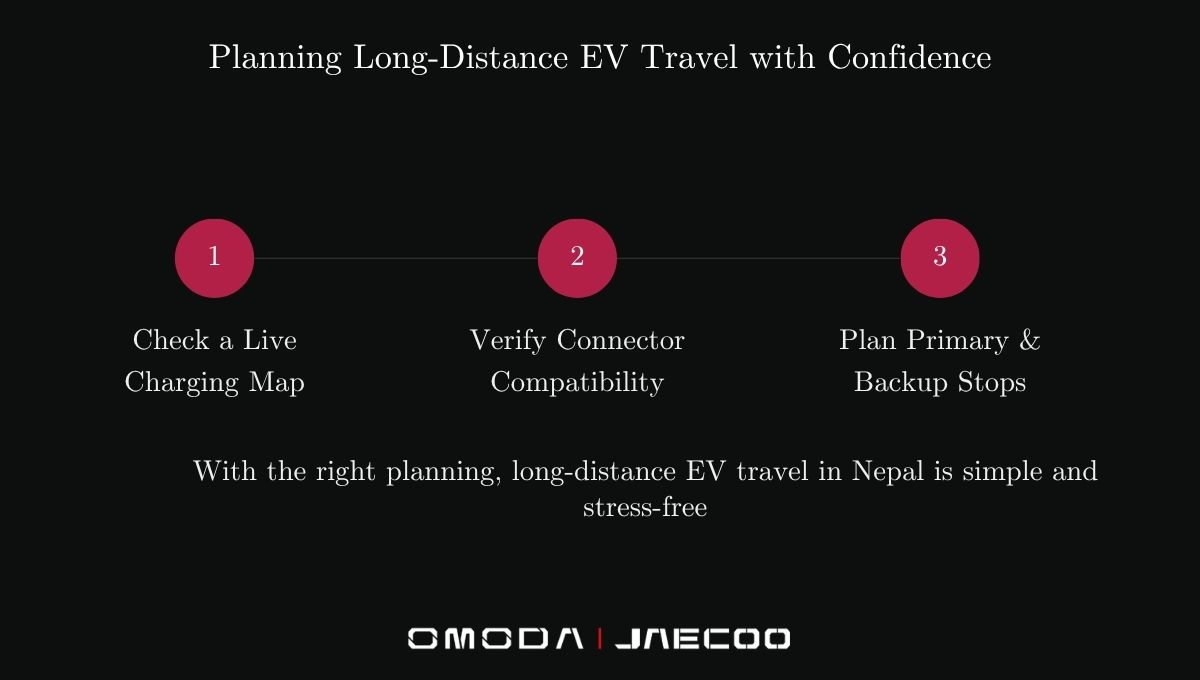
The best way to do this is to take three simple steps.
Prior to departure, check the availability of chargers with NEA Charge, NepalEVs, AirCharge, ElectriVa, and GadiCharge.
Plan your charging stop to match your vehicle's charging standard.
CCS2 compatibility ensures access to most the latest fast charging stations in Nepal for Omoda and Jaecoo owners.
Use charging stations like you would use fueling stations on a conventional road trip.
Think about where you'll charge and have a backup plan for charging.
The practice of this one habit virtually eliminates range anxiety and makes EV road trips more predictable.
Experienced EV drivers can enhance their charging routines.
Avoid these common mistakes:
· Getting on a highway without finding out if there is a charger along the way.
· Reaching a charging station having little or no battery charge remaining.
· Not checking connector compatibility.
· Using only one charging site with no backup.
· Not installing software or updates for apps.
Some preparation is essential for a more enjoyable ownership experience.
The ability of the EV and the availability of charging stations are key to modern EV ownership.
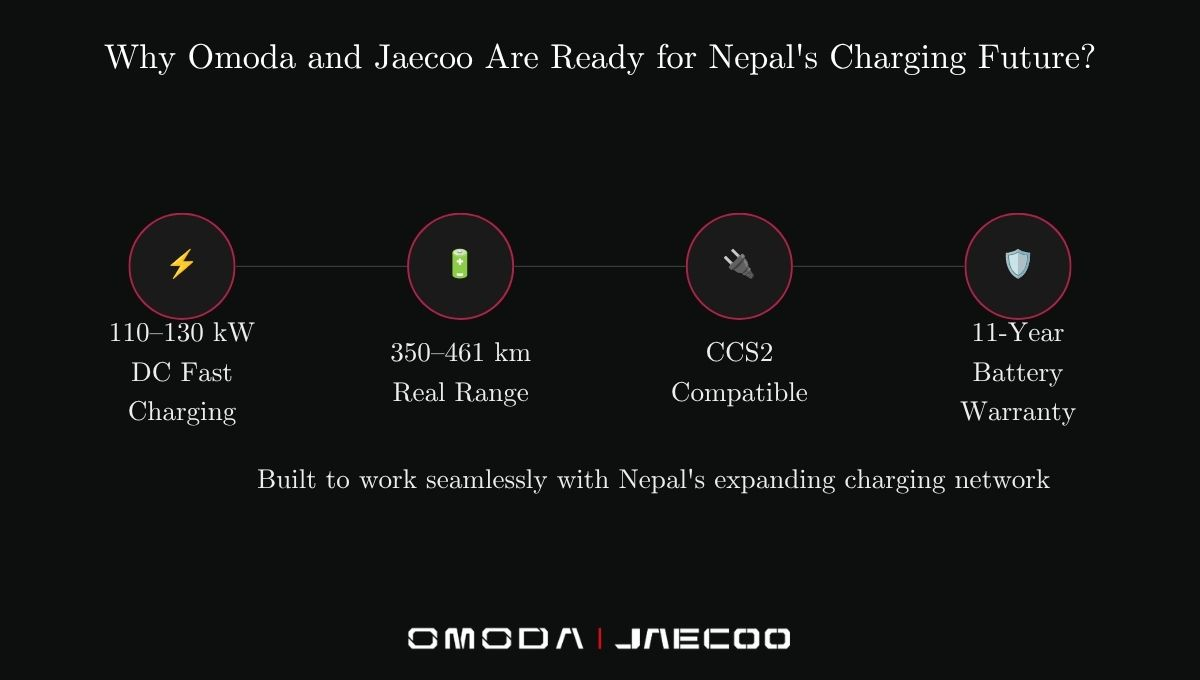
The Omoda and Jaecoo vehicles are designed to be compatible with CCS2 fast charging, are already compatible with many practical home charging solutions, and will be compatible with the growing public charging network in Nepal.
Drivers can benefit from increased convenience, flexibility, and confidence, whether they are driving around the city, commuting between major urban centers, or planning longer journeys.
Schedule a test drive today or head to your local Omoda | Jaecoo showroom to witness the future of electric mobility in Nepal.
EV charging stations in Nepal are no longer part of an emerging concept; they are becoming an integral part of the country's transportation network.
Fast chargers are being installed on more highways, urban areas are becoming more widely accessible, and digital platforms provide easier access to locating the stations for drivers and commuters.
For Omoda and Jaecoo owners, it's not just about the charging. It involves the ability to travel safely, from driving in the city traffic of Kathmandu to enjoying Pokhara's picturesque landscapes or heading further afield in Nepal.
The charging experience is even more compelling as the charging ecosystem continues to expand. With its innovative battery technology, CCS2 fast-charging capability, and user-friendly home-charging features, Omoda and Jaecoo vehicles are poised to empower drivers in Nepal to actively participate in the nation's electric mobility revolution without sacrificing convenience, performance, or peace of mind.
NEA currently has 62 fast chargers, NepalEVs shows 335 charging points and there is an estimation that there could be over 1,000 of these in Nepal as a whole.
Some of the popular ones are NEA Charge, GadiCharge, ElectriVa, AirCharge, and NepalEVs.
The most common charging standards are CCS2, Type 2, and GB/T.
Charging costs are different when charging at home, charging at AC destination chargers, and charging at DC fast chargers. For the majority of the time, EV charging is still far more affordable than using petrol or diesel power.
Yes. Most owners still prefer home charging, and for those who do, it's convenient. Most EVs can be charged at home overnight with a special home charger.