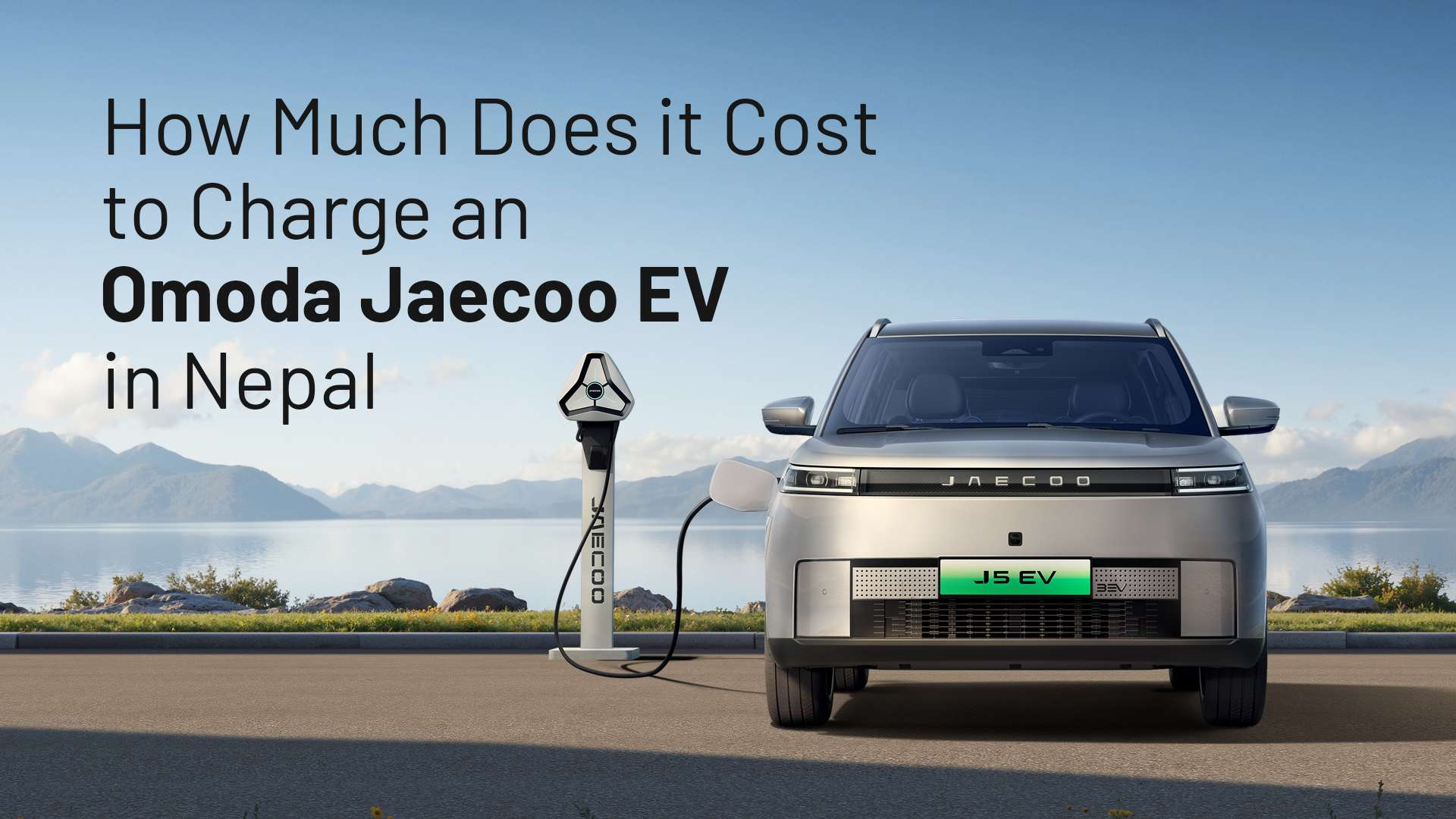
How Much Does It Cost to Charge an Omoda or Jaecoo EV in Nepal?
August 12, 2026
How Much Does It Cost to Charge an Omoda or Jaecoo EV in Nepal?
August 12, 2026
Key Takeaways
· Charging an Omoda or Jaecoo EV in Nepal typically costs Rs. 406–723 at home.
· NEA public charging remains one of the most affordable public charging options.
· Private DC fast charging costs more but provides rapid charging for long-distance travel.
· The Omoda E5 Pro currently has the lowest full-charge cost in the lineup.
· LFP battery technology offers enhanced safety and long-term durability.
· EV running costs remain substantially lower than comparable petrol vehicles.
The answer is one of the biggest reasons why EV adoption is rapidly expanding in Nepal.
While petrol prices continue to fluctuate and currently sit around Rs. 200 per litre (current rate). Electricity is still one of the lowest cost options for vehicle powering at Petrol or diesel.
From home charging to Nepal Electricity Authority (NEA) charging stations, to DC fast charging on road trips, EV operation is much more cost-effective than petrol-powered SUVs of similar size.
The cost savings are even more compelling for Omoda and Jaecoo owners. As long-range battery technology, expanding charging infrastructure, reduced maintenance expenses and government incentives for electric mobility all become part of the equation.
This guide will tell you how much you may see charging an Omoda or Jaecoo EV in Nepal cost, how much it costs to charge at home and how much it will cost to charge at public charging stations, and how much it will cost to charge each of the Omoda E5 Pro, the Jaecoo J5 and the Jaecoo J6T.
In addition, we will discuss the estimates of cost per kilometer, monthly running charges, types of EV charging stations in Nepal, battery technology and warranty period, and frequently asked questions by Nepali EV buyers.
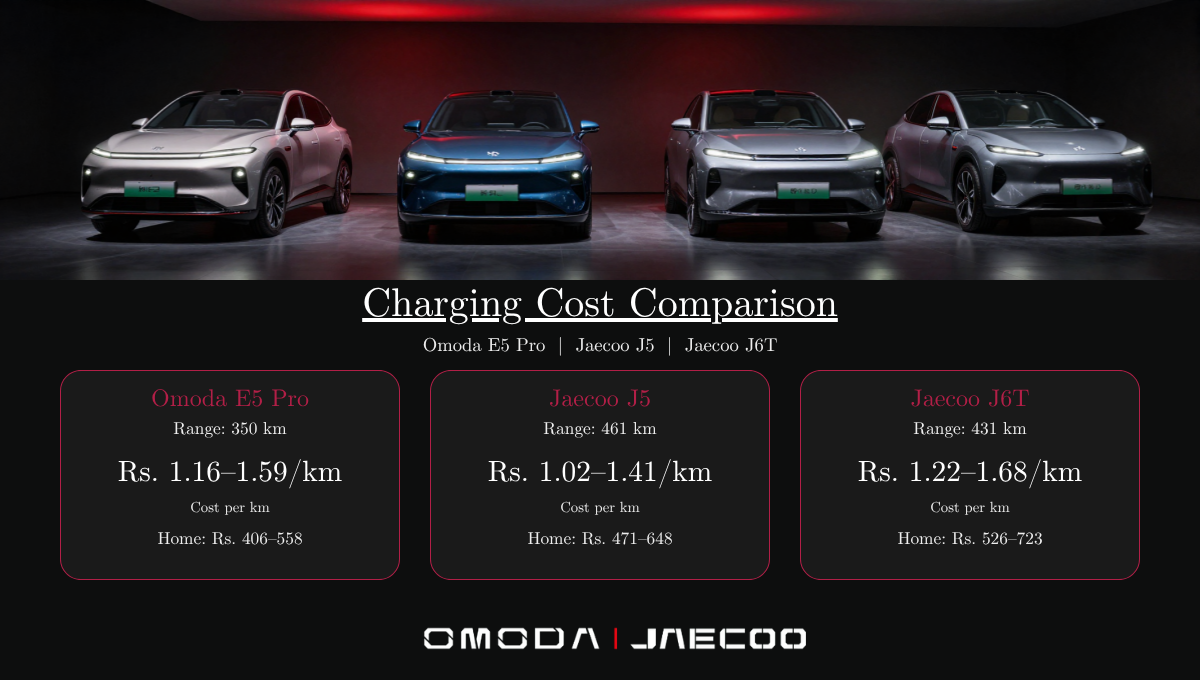
At current charging tariffs and electricity costs, a full charge will approximately cost:
|
Charging Method |
Estimated Cost |
|
Home Charging |
Rs. 400 – Rs. 723 |
|
NEA Public Charging |
Rs. 304 – Rs. 690 |
|
Private DC Fast Charging |
Rs. 761 – Rs. 1,314 |
Disclaimer: Charging costs are estimated and may vary based on the latest electricity tariff. Please check current electricity rates before calculating your charging cost.
The exact cost depends on:
· Battery size
· Electricity tariff
· Charging location
· Charging time
· Household electricity consumption
Most car owners will find that home charging is still the cheapest alternative.
A battery size determines how much it will cost to charge an EV.
The following are the latest battery specifications of Omoda and Jaecoo EVs available in Nepal.
|
Model |
Battery Capacity |
Driving Range |
|
Omoda E5 Pro |
50.7 kWh |
Up to 350 km (WLTP) |
|
Jaecoo J5 EV |
58.9 kWh |
Up to 461 km |
|
Jaecoo J6T EV |
65.69 kWh |
Up to 431 km |
The bigger the battery, the more energy it can hold, and the greater the range it can provide, but the larger the battery, the more fully it can be charged and the higher the cost.
Charging Cost = Battery Capacity (kWh) × Electricity Rate (per kWh).
Example:
Omoda E5 Pro
50.7 kWh × Rs. 10 = Rs. 507
This calculation assumes that the battery is charged from 0% to 100%.
For the majority of EV owners, charging from empty is a rare occurrence. As for real world charging, daily charging is usually between 20% to 80% with actual charges much lower.
Some of the most common errors in EV articles are assuming that everyone pays the same electricity rate.
Nepal Electricity Authority (NEA) has progressive slab pricing, that is, the price of electricity changes based on the total monthly consumption of electricity by a house.
If the amount of electricity used grows, more units could become subject to higher tariff bands.
This means that the total cost of home charging will vary depending on the EV and the monthly electricity consumption of your home.
There is a misconception that NEA is responsible for hike in electricity tariffs.
The rates of electricity tariffs do not change.
To address the situation, the Government of Nepal implemented a 5% value added tax (VAT) on residential electricity bills for consumers whose consumption exceeds 50 units per month.
Those savings will be a minor amount of the cost of owning an EV, as most EV-owning households will likely exceed that limit on their bills.
Not all charging stations are the same.
By knowing the various charging options available, you can determine which one will best suit your lifestyle and budget.
This is the most common charging practice for EV owners in Nepal.
You can charge your car at home, using a standard 220V electrical outlet in the home.
Typical Characteristics
· Standard household outlet
· Convenient overnight charging
· Adds approximately 6–10 km of range per hour
· Lowest charging cost
Most homeowners effectively pay around:
Rs. 8–12 per kWh
A full charge for a 40-kWh EV battery may cost approximately:
Rs. 320–480
For most drivers, home charging provides the best combination of convenience and affordability.
A dedicated 7 kW wallbox charger is a popular choice for EV owners.
Benefits include:
· Faster charging speeds
· Improved safety
· Better charging efficiency
· Greater convenience
The average installation price is between:
Rs. 30,000–60,000
Depending on wiring requirements, and the layout of the property.
Explore our complete EV charging guide.
These chargers are found more frequently at:
· Shopping malls
· Hotels
· Commercial complexes
· EV dealerships
· Public parking facilities
The normal power output is in the range of:
7 kW and 22 kW
Most EVs can be fully charged in about:
4–8 hours
NEA stations normally levy utility fees, which are dependent upon time of day, below transportation tariffs.
Rates are typically:
· Off-peak: around Rs. 6/kWh
· Daytime: around Rs. 9/kWh
· Peak periods: around Rs. 11/kWh
Private operators may charge:
Rs. 12–18 per kWh
for the convenience of premium locations.
DC fast chargers are built to handle fast charging, especially for long-distance trips.
DC chargers send electricity straight to the battery, as opposed to the AC charger, which is in the car.
· 50 kW
· 60 kW
· 120 kW
· 150 kW+
Most modern EVs can be charged from:
20% to 80% in approximately 30–60 minutes
This varies according to the charger's power and battery specifications.
Private DC fast charging typically costs:
Rs. 15–20 per kWh
A complete charge for a 50-kWh battery generally costs:
Rs. 750–1,000
This is a lot easier and cheaper than filling up a petrol car for a comparable range.
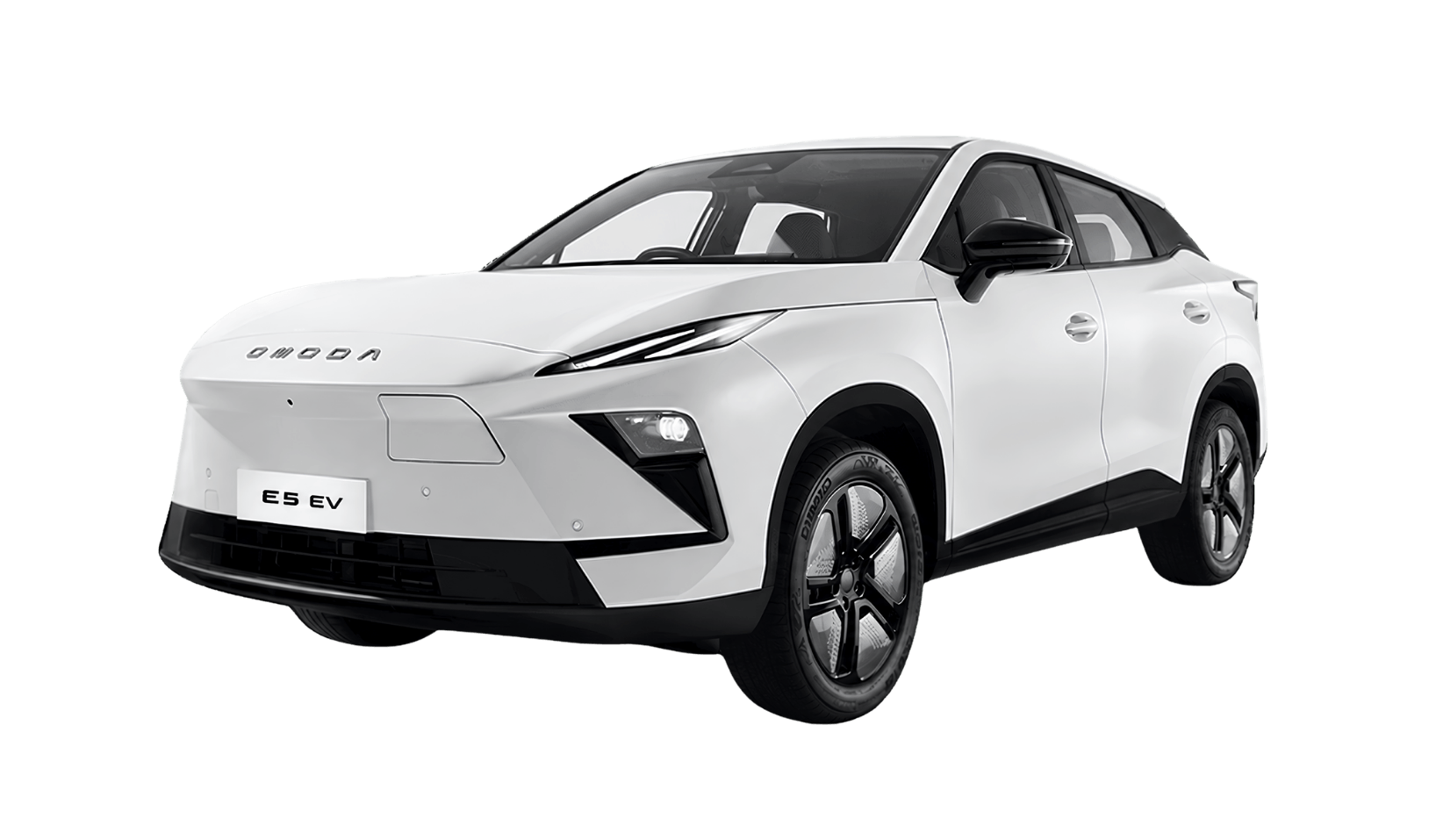
The Omoda E5 Pro is an efficient, intelligent, and practical model to use for everyday driving.
Key Specifications
· 50.7 kWh Battery
· LFP Battery Technology
· Up to 350 km WLTP Range
· 110 kW DC Fast Charging
|
Charging Type |
Cost |
|
Home Charging |
Rs. 406 – Rs. 558 |
|
NEA Public Charging |
Rs. 304 – Rs. 533 |
|
Private DC Fast Charging |
Rs. 761 – Rs. 1,014 |
Approximately:
Rs. 1.16–1.59 per km
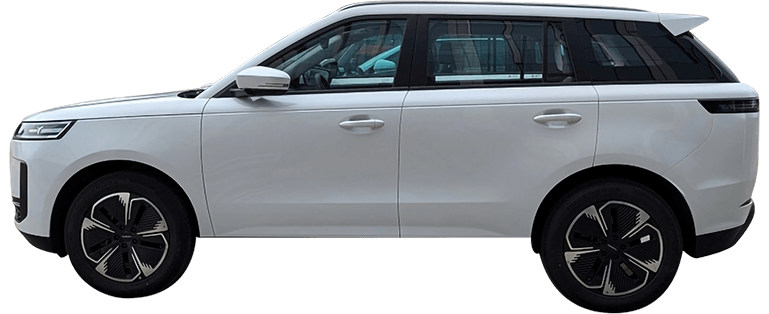
The Jaecoo J5 offers a great deal of performance, range and charging affordability.
Key Specifications
· 58.9 kWh Battery
· Up to 461 km Range
· Advanced Battery Management System
|
Charging Type |
Cost |
|
Home Charging |
Rs. 471 – Rs. 648 |
|
NEA Public Charging |
Rs. 353 – Rs. 618 |
|
Private DC Fast Charging |
Rs. 884 – Rs. 1,178 |
Approximately:
Rs. 1.02–1.41 per km
Learn more about the Omoda E5 Pro specifications.
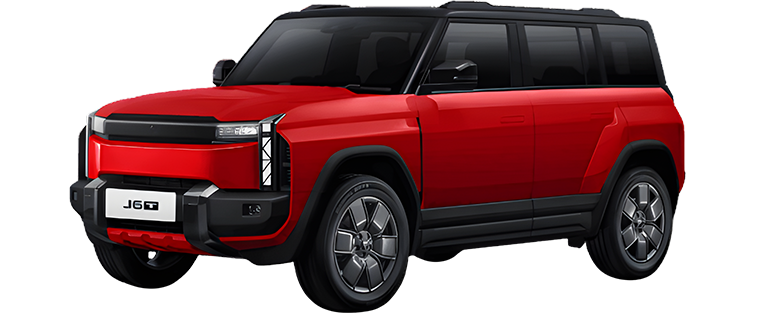
The Jaecoo J6T is built for drivers seeking long-distance confidence and premium SUV capability.
Key Specifications
· 65.69 kWh Battery
· Up to 431 km Range
· 130 kW DC Fast Charging
|
Charging Type |
Cost |
|
Home Charging |
Rs. 526 – Rs. 723 |
|
NEA Public Charging |
Rs. 394 – Rs. 690 |
|
Private DC Fast Charging |
Rs. 985 – Rs. 1,314 |
Approximately:
Rs. 1.22–1.68 per km
If you assume you drive about 1,000km per month, estimated charging costs are:
|
Model |
Monthly Charging Cost |
|
Omoda E5 Pro |
Rs. 1,160–1,590 |
|
Jaecoo J5 |
Rs. 1,020–1,410 |
|
Jaecoo J6T |
Rs. 1,220–1,680 |
These numbers can fluctuate depending on driving habits, topography, weather and charging patterns.
There are other elements of the EV ownership equation besides charging cost.
The battery chemistry is a significant factor in:
· Safety
· Durability
· Charging performance
· Thermal stability
· Long-term ownership costs
The Omoda E5 Pro is powered by Lithium Iron Phosphate (LFP) battery.
Advantages include:
· Exceptional thermal stability
· Enhanced safety
· Long cycle life
· Reduced degradation
· Better tolerance for frequent charging
LFP batteries are one of the safest EV batteries available now.
Modern Omoda and Jaecoo EVs continuously monitor:
· Temperature
· Charging speed
· Voltage
· Cell health
This intelligent battery management helps optimize performance and maintain long-term battery health.
Charging costs are just one part of the EV ownership consideration! They may be the most critical parts of a vehicle, and that is where long-term confidence is gained.
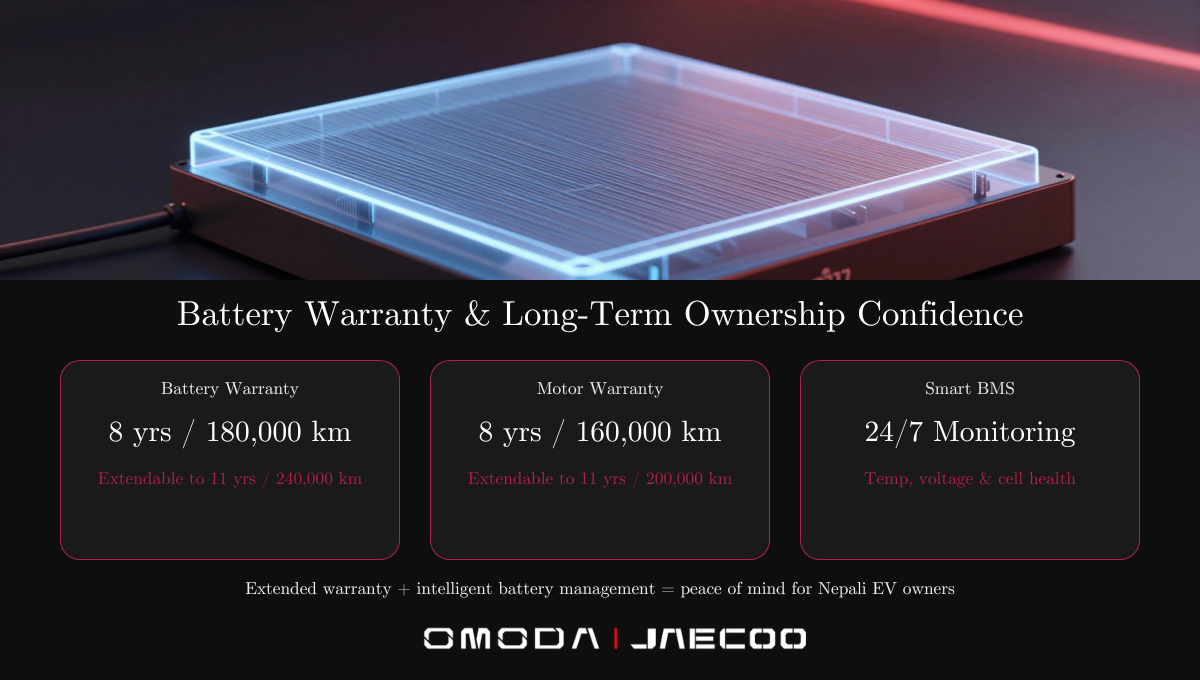
All Omoda and Jaecoo EV have a manufacturer-backed warranty with a high-voltage battery of 8 years or 180,000 km and electric motor of 8 years or 160,000 km. To enjoy utmost peace of mind, eligible vehicles are eligible for Omoda Jaecoo Nepal's Extended Warranty Program that extends the warranty by an additional 3 years or 60,000 km. This means that the total battery protection is extended to 11 years or 240,000 km; the total motor protection is extended to 11 years or ,000 km.
Advanced Battery Management Systems (BMS) provide battery temperature, voltage, charging performance and battery condition monitoring, and full warranty coverage. These smart systems allow for optimized efficiency, ensure long-term durability, and deliver reliable performance throughout the vehicle's life.
This combination of extended warranty, intelligent battery monitoring, and authorized after-sales service promises a more secure ownership journey, more resale value, and confidence to EV owners in Nepal.
The government of Nepal has made a strong commitment to promoting electric mobility by investing in charging stations and implementing supportive policies.
NEA has been consistently rolling out public charging stations in Nepal.
Recent developments include:
· The seven provinces will have charging stations.
· High speed corridors between major cities.
· Multi-vehicle charging facilities
· Online charging management systems that are integrated.
These investments are paving the way for longer-range EV travel.
Nepal is promoting EV adoption through:
· Reduce tax on EV imports
· The demand for imported fuel is lowered.
· Encourage the growth of charging infrastructure
· Improved access to EV financing
These efforts are contributing to increasing the accessibility of EV ownership for consumers in Nepal.
At the current price of petrol, which is around Rs. The long-term economics are now increasingly favorable for EVs, with pricing at NPR 200 per litre.
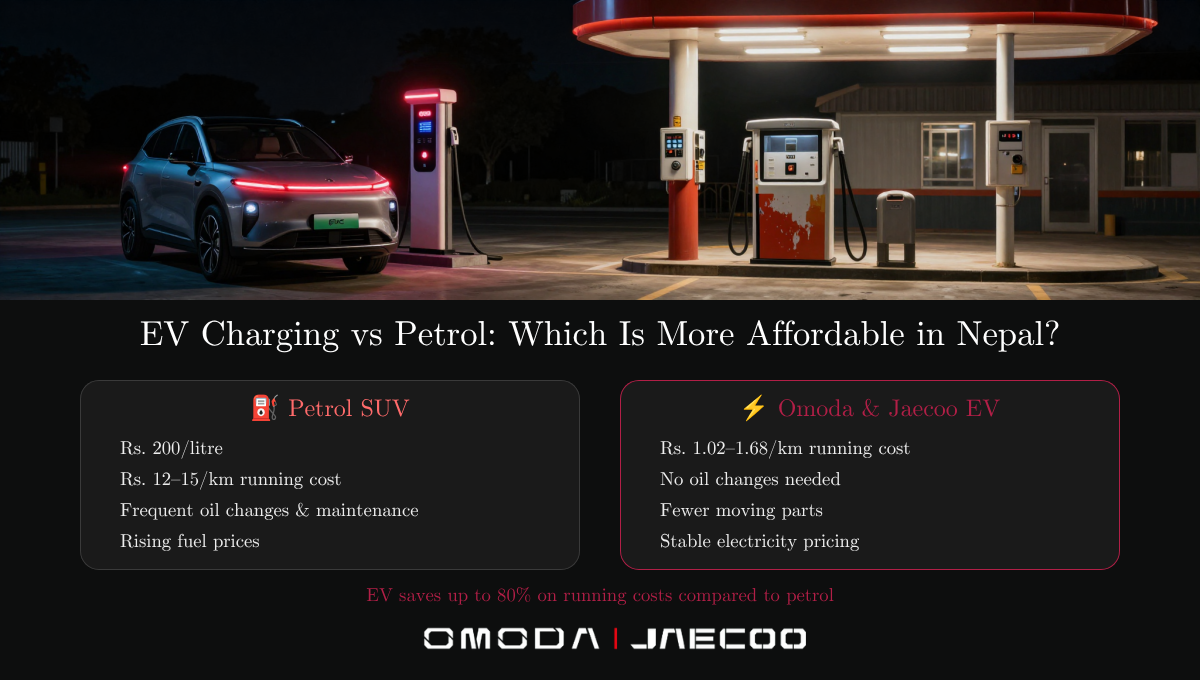
Disclaimer: Petrol costs are estimated and may vary based on the latest fuel prices. Please check current petrol rates before calculating your fuel cost.
EV owners will receive benefits including:
· Lower energy costs
· Reduced maintenance expenses
· No oil change requirements.
· Fewer moving components
· Forecasted monthly running expenses
With low prices to charge and growing infrastructure, EV ownership is an attractive long-term investment.
So, if you are wondering how much it costs to charge an Omoda or Jaecoo EV in Nepal, then it is very simple.
The amount of charge to run a full charge is:
· Rs. 406–723 at home
· Rs. 304–690 at NEA public charging stations
· Rs. 761–1,314 at private DC fast chargers
The actual cost depends on the size of the battery, electricity usage, charging frequency, and charging location.
One thing is certain, though, however it is far cheap to charge an Omoda or Jaecoo EV as compared to fueling a similar petrol vehicle. With superior battery technology, expanding charging network, and lower operating expenses, the ownership of EVs remains one of the most astute mobility decisions for Nepali drivers.
Drive an Omoda and Jaecoo EV to experience the performance, technology and savings.
Find out the smarter way to drive on a test drive today!
A full charge typically costs between Rs. 406–723 at home, Rs. 304–690 at NEA public charging stations, and Rs. 761–1,314 private DC fast chargers, depending on the model.
Yes. The most cost-effective method is usually home charging, which is the cheapest per unit of electricity and the best way to charge a day.
NEA-operated public charging stations usually have lower rates during non-rush hours, typically 10 pm to 5 am.
A dedicated wall box charger installation typically costs between Rs. 30,000 and Rs. 60,000, depending on the electrical set-up of the property, 60,000.
The Omoda E5 Pro is powered by a Lithium Iron Phosphate (LFP) battery, which is safe, long-lasting, and durable.
Yes. Considering the cost of electricity, the running and maintenance expenses of EVs are much lower than those of similar petrol-based cars.