Best EV SUV for Rough Roads in Nepal
October 12, 2026
Best EV SUV for Rough Roads in Nepal
October 12, 2026
An SUV’s true capability is not found on a specification sheet. It is tested on Nepal’s potholes, steep climbs, broken roads and monsoon-soaked stretches.
So, if you're searching for the best electric SUV for rough roads in Nepal, don't look at ground clearance alone. Suspension, tyres, traction, protection, water wading, hill/road performance are all important.
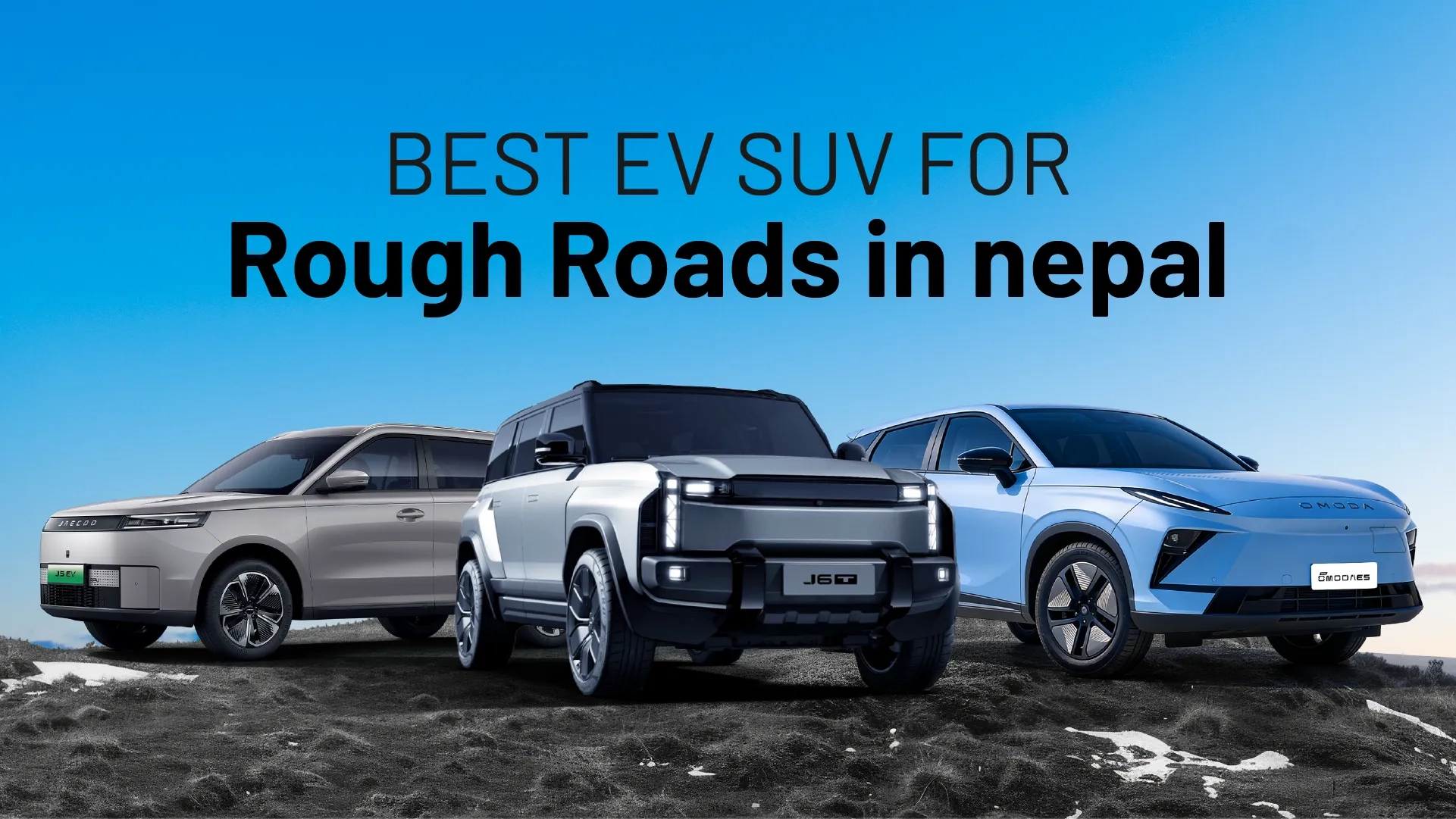
This guide explains what to look for and contrasts OMODA and JAECOO EVs to help you determine which one is the best for the roads you drive.
Key Takeaways
Ground clearance is important, but it isn't everything. Other factors affecting rough-road performance are suspension, tyres and vehicle geometry.
Clearance of around 185-200 mm or more can be beneficial for many uneven roads, and higher clearance would allow for more underbody space for deeper ruts and rougher roads.
Ground clearance and water-wading depth are different specifications, especially important during Nepal's monsoon.
Regular buyers of steep or rough terrain should consider traction, motor drive layout, systems for controlling the motor drive and suspension, not just motor power.
If you primarily drive on city roads, or in a mix of city roads and highways, a balanced EV SUV might be enough. If you're driving on rough terrain a lot, you might want to consider a JAECOO J6T SUV that's built for terrain.
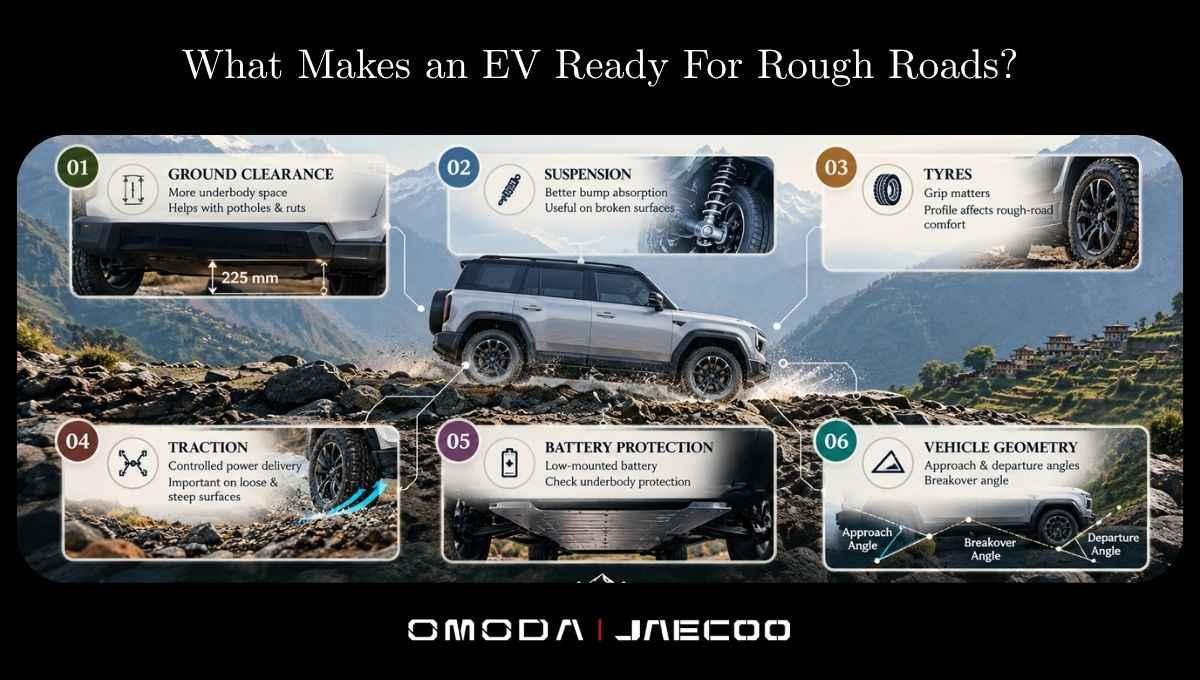
Ground clearance is the distance between the road and the vehicle's lowest point.
More clearance can reduce the risk of the underbody touching potholes, ruts, speed breakers, and uneven surfaces.
But high ground clearance alone doesn't make an EV an off-road vehicle.
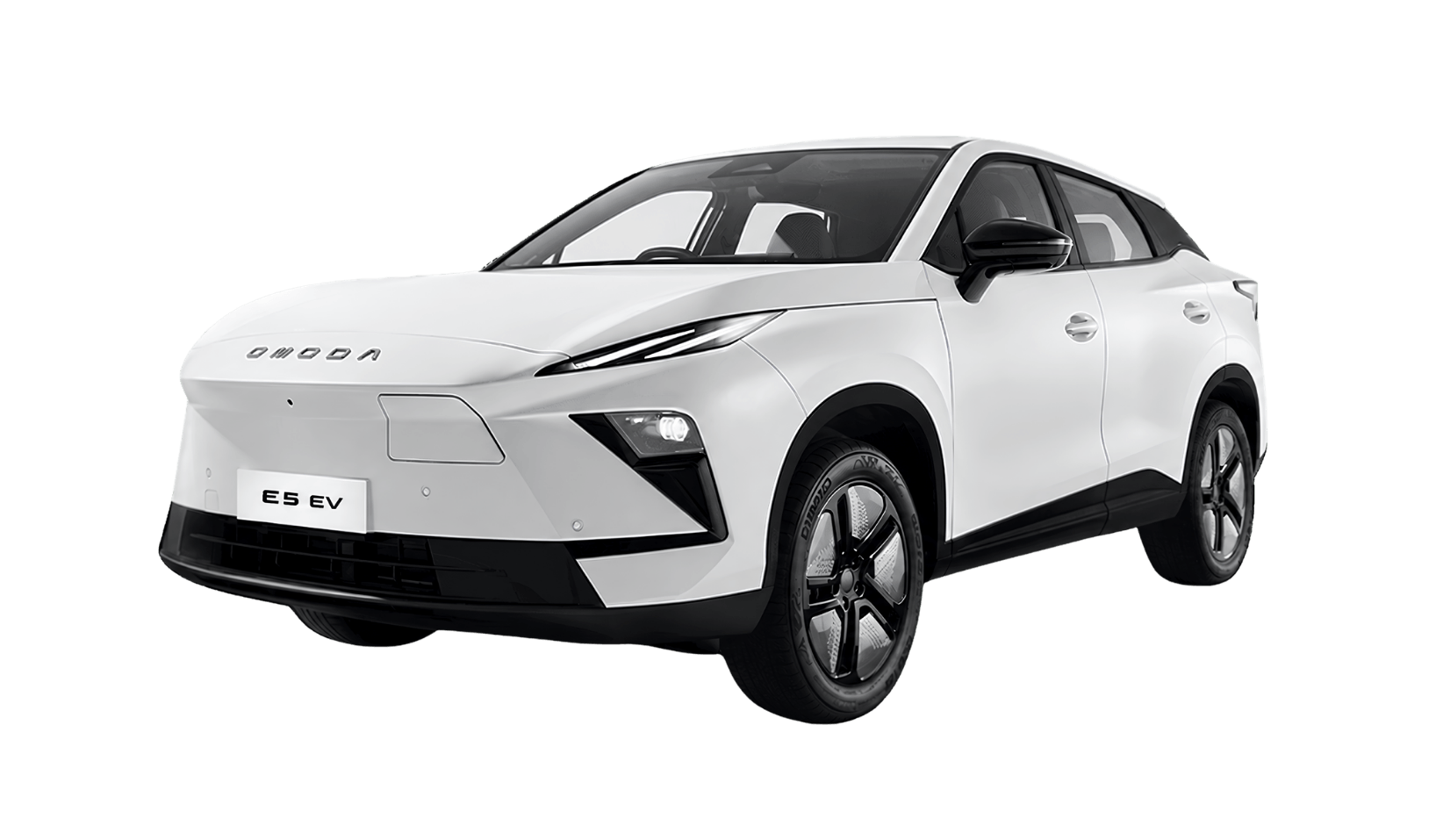
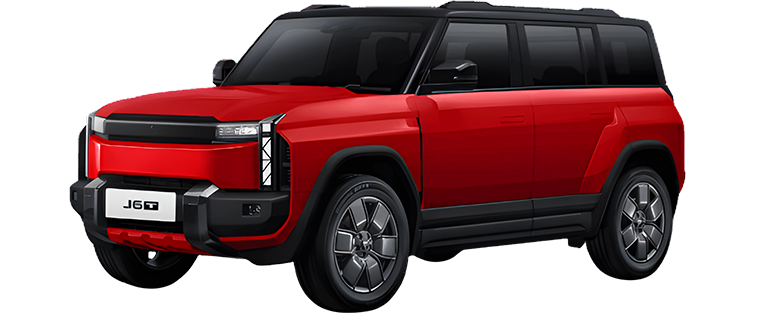
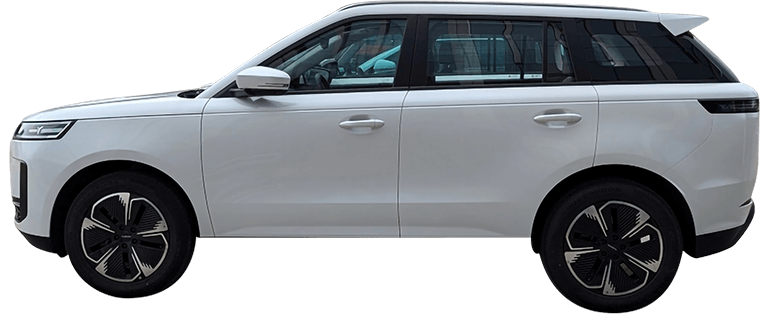
The OMODA E5 Pro has 191 mm of ground clearance, while the JAECOO J5 and J5 Pro have 185 mm. The JAECOO J6T provides 225mm which provides a larger clearance margin for demanding surfaces.
If you want to read more, check out our article on the importance of ground clearance in an electric SUV.
Clearance is a measurement of space underneath the vehicle.
Suspension and tyres are the key to the vehicle's response to challenging roads.
For rough roads, consider suspension travel, tyre profile, grip and how the vehicle absorbs repeated bumps. Large alloy wheels may look appealing, but they are not automatically better for broken roads.
The JAECOO J6T uses an H-ARM multi-link rear suspension, designed as part of its terrain-oriented setup.
An EV's battery pack is mounted low in the vehicle, so underbody protection deserves attention when you regularly drive over rocks, deep ruts or broken surfaces.
Don't assume that high ground clearance alone protects the battery. Check out the manufacturer's specifications and consider the type of roads you actually use.
Ground clearance is only part of SUV geometry.
Approach and departure angles affect how easily a vehicle handles steep ramps, sharp road edges, and deep dips. Breakover angle becomes relevant when crossing a pronounced hump or crest.
For rough hill roads, these measurements can be just as useful as comparing clearance figures.
Steep or loose surfaces require controllable traction.
Motor torque helps with hill starts and climbs, but tyres, traction management and drive layout determine how effectively that power reaches the road.
AWD can help in certain conditions, but AWD alone does not guarantee rough-road capability.
Instead of ranking vehicles purely from “best” to “worst,” it is more useful to understand what each one is suited to.
|
EV SUV |
Ground Clearance |
Listed Range |
Key Capability |
Suitable For |
|
191 mm |
350 km WLTP |
99 kW, 288 Nm |
City + mixed roads |
|
|
185 mm |
405 km |
155 kW, 288 Nm, FWD |
City + family/mixed roads |
|
|
185 mm |
Up to 461 km |
155 kW, 288 Nm, FWD |
Family + longer trips |
|
|
225 mm |
Up to 431 km |
9 modes, 625 mm wading, H-ARM rear suspension |
Rough roads + hills |
The OMODA E5 Pro uses a 50.7 kWh LFP battery, 99 kW motor and 288 Nm torque, with a 350 km WLTP range.
The JAECOO J5 Pro uses a 50.6 kWh CATL LFP battery, 155 kW motor, 288 Nm torque, FWD and 185 mm ground clearance, with a 405 km claimed range. The JAECOO J5 uses a 58.9 kWh battery and lists up to 461 km, with the same 185 mm clearance and FWD layout.
The JAECOO J6T takes a more terrain-focused approach, with 225 mm ground clearance, 625 mm water-wading capability, nine intelligent driving modes, H-ARM multi-link rear suspension and up to 55% gradient capability.
For drivers who regularly face steep climbs, rough tracks and challenging terrain, explore the JAECOO J6T's off-road capability and see whether its terrain-focused setup matches your routes.
Listed range figures are manufacturer-rated reference figures and should not be treated as guaranteed real-world range.
There is no universal number for each road in Nepal.
For practical purposes:
180-190 mm: Good for most urban roads and for moderate uneven surfaces.
190-210 mm: Useful additional margin for 'potholes' and 'mixed terrain'.
Above 210 mm: This is more beneficial if the surface your usually ride on is more challenging and has deeper ruts.
But always take clearance into account with suspension, tyres, approach angles and underbody protection.
The size of the vehicle is also important. Turning radius, wheelbase, and visibility may be an issue for manoeuvrability on narrow hill roads.
A vehicle that can cope with potholes, gravel, and broken asphalt is not necessarily built for technical off-road driving with deep mud, rocks, extreme gradients, or water crossings.
It's a crucial difference.
If your daily driving doesn't require you to drive on bad roads, you might not need a dedicated off-road SUV. However, if your driving experiences often include steep inclines and descents, deep ruts, water crossings and rough roads, extra capability comes in very handy.
Ground clearance is not water-wading depth.
The JAECOO J6T has a published 625 mm water-wading capability, alongside its 225 mm ground clearance.
A water-wading rating does not make every flooded road safe. Water can hide potholes, drains, debris, and damaged road edges.
During monsoon driving, consider water depth, current, visibility, and the condition of the road underneath. Never treat a published wading figure as permission to enter unsafe water.
Before relying on clearance alone during the monsoon, learn how ground clearance and water-wading capability differ and what that means for EV driving in Nepal.
Rough-road driving can affect efficiency just as highway driving does.
Hills, traffic, speed, passengers, luggage, air conditioning, weather and driving style can all change energy consumption.
The OMODA E5 Pro is rated for 350 km WLTP, while a Nepal road test referenced by OMODA & JAECOO Nepal estimated around 330 km under those test conditions. That figure is a local reference point, not a guaranteed range for every driver.
For longer journeys, plan around elevation, route conditions, charging availability, and a sensible battery reserve, rather than relying solely on the maximum claimed range.
Our OMODA E5 Pro range guide looks more closely at city, highway and hill-driving factors.
Which EV SUV Fits Your Roads?
The right electric SUV for Nepal depends on where you drive most often.
Instead of choosing only by price or claimed range, consider how the vehicle’s ground clearance, suspension, tyres, visibility, charging access and traction match your regular routes.
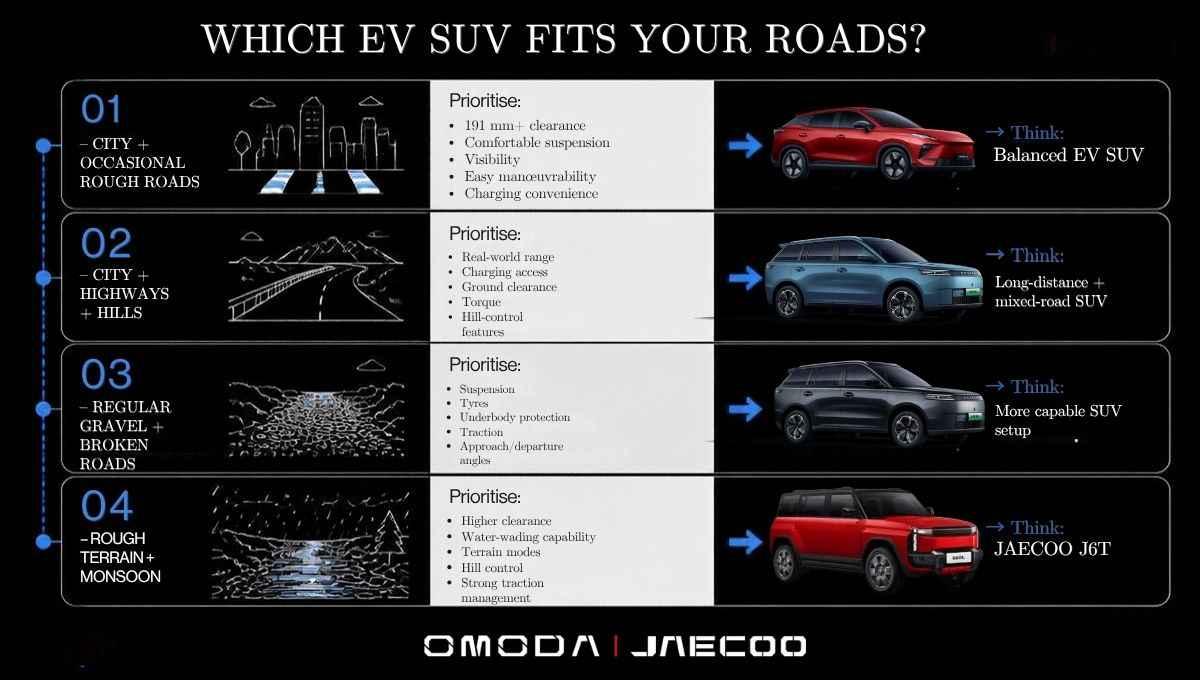
Priorities:
Adequate ground clearance
Comfortable suspension
Good visibility
Easy manoeuvrability
Convenient charging access
For mainly urban driving, everyday comfort and ease of use can matter more than extreme off-road capability.
Look for a balanced package of:
Around 400–450 km claimed range for greater flexibility on longer trips
Accessible charging along your routes
Good ground clearance
Strong low-speed torque delivery
Hill-start or hill-control features
Tyres suited to mixed road conditions
Give greater weight to:
Higher ground clearance
Well-tuned suspension
Suitable tyres
Underbody protection
Good traction
Useful approach and departure angles
Here, the way an SUV handles poor surfaces can matter more than having the highest range figure.
Consider vehicles with:
Higher ground clearance
Published water-wading capability
Suitable drive or terrain modes, where available
Hill-control systems
Strong traction management
Suspension and tyres suited to demanding conditions
For monsoon driving, do not judge capability by clearance alone. Water-wading capacity, tyres, traction and actual road conditions all influence how confidently an EV SUV can handle wet and uneven routes.
We don't believe every driver needs the same type of EV.
The OMODA E5 Pro offers 191 mm ground clearance and a 350 km WLTP range, making it a practical option for urban and mixed-road driving.
The JAECOO J5 and J5 Pro offer 185 mm clearance with SUV practicality for everyday and intercity use.
For buyers who regularly encounter steep hill roads, rough tracks or monsoon-affected sections, the JAECOO J6T is the most terrain-focused option in our current EV SUV lineup, with 225 mm ground clearance, 625 mm water-wading capability, nine intelligent driving modes and terrain-oriented suspension.
Take a closer look at the JAECOO J6T and explore its full specifications, dimensions and terrain-focused features.
For primarily urban and mixed-road driving, the OMODA E5 Pro and JAECOO J5/J5 Pro offer a different balance of everyday practicality, comfort, range and efficiency.
When it comes to comparing capabilities with budget, read our latest price comparison of OMODA & JAECOO EV before making your shortlist.
The current listed prices include NPR 51.99 lakh for the OMODA E5 Pro Single Tone, NPR 52.39 lakh for the E5 Pro Dual Tone, NPR 51.99 lakh for the JAECOO J5 Pro, NPR 56.99 lakh for the J5, and NPR 71.99 lakh for the J6T.
Before choosing an EV SUV, check:
☐ Ground clearance
☐ Approach/departure angles
☐ Suspension
☐ Tyres
☐ Battery and underbody protection
☐ Drive layout and traction control features
☐ Water wading capability
☐ Real world range
☐ Charging along routes
☐ Puncture solution
☐ Warranty and service support
If you travel outside Kathmandu on a regular basis, also find out where you can find authorized service support during your regular routes.
It depends on the roads you regularly drive on. For an electric SUV like the JAECOO J6T, don’t look at just one specification; consider its 225 mm ground clearance, suspension, tyres, traction, battery protection, hill-control features, water-wading capability, 431 km claimed range and charging convenience to see how well it suits your routes in Nepal.
Clearances over about 185-200 mm can be beneficial for a lot of mixed road conditions, and those above 210 mm will provide more underbody space for tougher surfaces. Suspension and vehicle geometry still matter.
No. AWD can improve traction in certain conditions, but tyres, suspension, traction control, power delivery and ground clearance also influence performance.
It can. Hills, traffic, speed, load, weather, air conditioning and driving style can all increase energy consumption.
The best EV SUV for rough roads in Nepal is the one whose complete capability matches your actual roads.
For everyday city and mixed-road use, a balanced EV may be all you need. If rough tracks, steep climbs and monsoon-affected roads are regular parts of your journey, a more terrain-focused SUV deserves closer attention.
For buyers who need that extra capability, the JAECOO J6T stands apart in our current lineup with its 225 mm ground clearance, 625 mm water-wading capability, and nine intelligent driving modes.
Ready to see whether it fits your driving? Check the latest model details and price, then book a test drive with us. A test drive lets you experience the things a specification sheet cannot fully show ride comfort, visibility, seating position, manoeuvrability, and confidence on uneven roads.